Comfort
In this section you'll see exactly what is done from boarding to arrival. Please click the section you would like to see.

Before Departure
This section takes you through what we do before guiding you onboard the airplane. There are a number of preparations we must complete to insure that you reach your destination safely.
Takeoff and In-flight
From take off until level flight is reached, the primary concern of our pilots and cabin attendants is with safety on the aircraft.
Landing and Taxiing
Your safety during landing is ensured by the cooperative teamwork of everyone at ANA. We put everything we've got into maintaining the same high level of safety for all subsequent flights.
Flight Control

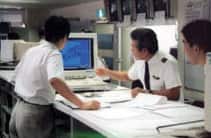
First we introduce the flight dispatcher who supports the flight crew on the ground. Before the flight, the flight dispatchers investigate the weather, cloud conditions, turbulence and other factors on the flight route. They also check detailed weather information at the departure and arrival airports, such as wind direction, wind speed, visibility, ceiling (minimum cloud height), and runway conditions. They then determine the flight route and altitude and draw up a flight plan. The gross weight of the departing airplane is calculated from the number of passengers and amount of cargo on board. They also calculate the quantity of fuel required to reach the destination airport plus the quantity of fuel required to reach the alternate airport should the aircraft be unable to land at its primary destination, and complete the fuel loading plan. In addition, they check information regarding the planned flight route, which runways can be used at each airport, information on taxiways, and radio frequencies used by air traffic control.
Flight Crew
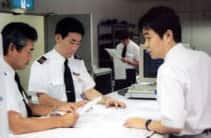
One hour before the scheduled departure of your flight, the pilots go over the various flight plans made by the flight dispatcher. In order to promise you a comfortable flight, the flight plan is approved only after final confirmation of the fuel loading plan, alternate airports, flight altitude, and the route adjusted for the day's weather conditions. After sufficient deliberation, the final plan drawn up by the captain and the flight dispatcher is sent to the air traffic control facilities along the flight route. Then the flight crew puts the completed flight plan documents along with the flight manual, pilot license, etc., into a flight bag and goes to the airplane to complete the pre-flight check. The aircraft is checked by the maintenance staff and finally by the pilots before any passengers can board.
Mechanics
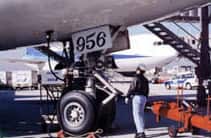
By the time the pilot arrives, the airplane has already undergone a series of checks by ANA's highly trained professional mechanics. In the first check of the day, the mechanics turn on the power in the airplane and check that every system is operating correctly. They check that the hydraulic system works correctly, see that the rudder and ailerons move smoothly, and make sure that the tires are correctly pressurized.
Preparation during the winter is particularly thorough. Snow on the airplane affects more than just the weight of the plane -- it has a negative influence on its aerodynamic performance. While you are waiting to board, mechanics and other ground staff remove the snow from the aircraft. We have various methods of snow removal available to us today. Instead of removing it by hand, a chemical de-icing agent is sprayed on the aircraft to remove the snow. However, snow trapped in tight spots and places that can't be reached by the spray must be removed by hand, just like in the old days.
Summer also raises some concerns. After landing on a hot runway, a plane's tires become extremely hot. If the tires become too hot, the air pressure in the tire increases and air is released through the pressure release valve. That must be kept in mind when the aircraft tires are checked.
Cabin Attendants
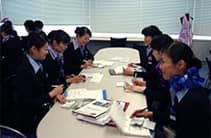
Now we'll take a look at how the cabin attendants get things ready for your flight. The first thing they do is check flight and passenger information for the day's flight. The cabin attendants who will work together on the flight meet together, and the chief purser determines the formation in the cabin and delegates various other duties. They review emergency procedures as well as the location and use of emergency equipment, and go over the in-flight service. When these tasks have been completed they board the aircraft. Once onboard they check that all emergency equipment is properly placed, make sure there are no irregularities in the cabin and that it is clean, and check that all service goods are onboard. When the pilot comes onboard a briefing is held to go over the flight route, weather conditions enroute, weather and temperature at destination, and review duties and responsibilities in case of emergency. The chief purser then briefs the other attendants on passenger information acquired from the ground staff. When the preparations are complete, the chief purser reports to the captain and passengers can begin to board the airplane to be welcomed by our friendly attendants.
Airport Operation
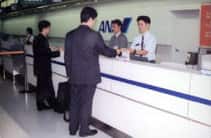
The counter staff are the first to welcome passengers to ANA. They take care of boarding procedures, baggage check-in, etc. To ensure your safety and comfort, we may ask your cooperation regarding your baggage and seat assignment. For further details please refer to Passenger Services in the Staff section.
Takeoff and In-flight
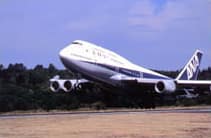
Once all passengers are onboard and the crew has received the necessary documents from the ground staff, the entry door is closed. The chief purser then signals the other attendants to make all doors ready for departure. After notifying the captain that all doors are secure, the purser makes an announcement which welcomes everyone aboard. A safety video is then shown. The video tells what to do in case of an emergency so it is extremely important to follow along. After the video has finished, the cabin attendants do a cabin check to make sure that all seatbelts are properly secured and baggage is safely stowed. After takeoff and the seat belt sign is turned off, the cabin attendants commence in-flight service. They distribute meals, serve drinks, offer duty-free items for sale and begin the in-flight movie, etc. During the service, cabin attendants are on the lookout for passengers who are feeling ill, and make sure there are no problems in the cabin or lavatories.
Landing and Taxiing
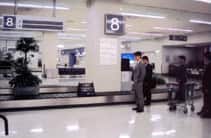
Once the aircraft lands and taxis into its spot, the cabin attendants prepare to open the door at the chief purser's signal. When the door opens the chief purser hands over the required documents to the ground staff and passes on information regarding connecting flights. Passenger disembarkation then begins. When all passengers have disembarked the chief purser notifies the captain to that effect. The cabin attendants then check for suspicious packages or items left behind by the passengers. Any unclaimed articles are given to the ground staff, and the cabin attendants leave the aircraft. They then do a general review of that day's flight and draw up a flight report.