Initiatives in Aircraft Flight Operations
Global Stance on the Environment
ICAO
At its 37th Assembly in 2010, ICAO adopted "CNG2020" (Carbon Neutral Growth from 2020) as a global target for preventing global warming in international aviation. This goal aims to improve annual average fuel efficiency by 2% until 2050 while capping net CO2 emissions after 2020 without further increase.

CORSIA Adoption
At the 39th Session of the International Civil Aviation Organization (ICAO) Assembly in 2016, the Carbon Offsetting and Reduction Scheme for International Aviation (CORSIA) was adopted as the global framework to achieve Carbon Neutral Growth from 2020 (CNG2020). Consequently, since 2021, airlines have been required to offset CO2 emissions that exceed the established baseline.
Furthermore, at the 41st ICAO Assembly in 2022, in light of pandemic-induced demand fluctuations, delegates agreed to lower the emissions baseline from 2024 onward to 85% of 2019 levels, substantially tightening regulatory compliance requirements.
IATA
In October 2021, at its 77th Annual General Meeting, IATA—representing the world's leading airlines—unanimously adopted a resolution to achieve net-zero CO2 emissions by 2050. This resolution serves as a collective roadmap for decarbonization across the global aviation industry.
Regulatory Developments for SAF Adoption
The adoption of SAF (Sustainable Aviation Fuel) has become a critical priority for decarbonizing the aviation sector. In the European Union (EU), the "ReFuelEU Aviation" regulation commenced, mandating a specific percentage of SAF usage for flights departing from EU airports. Concurrently, the Japanese government (Ministry of Land, Infrastructure, Transport and Tourism) has established a target to replace 10% of the fuel consumed by domestic airlines with SAF by 2030, reflecting the rapid development of legal and regulatory frameworks globally and domestically.
ANA Group's Initiatives for Reducing CO2 Emissions from Aircraft
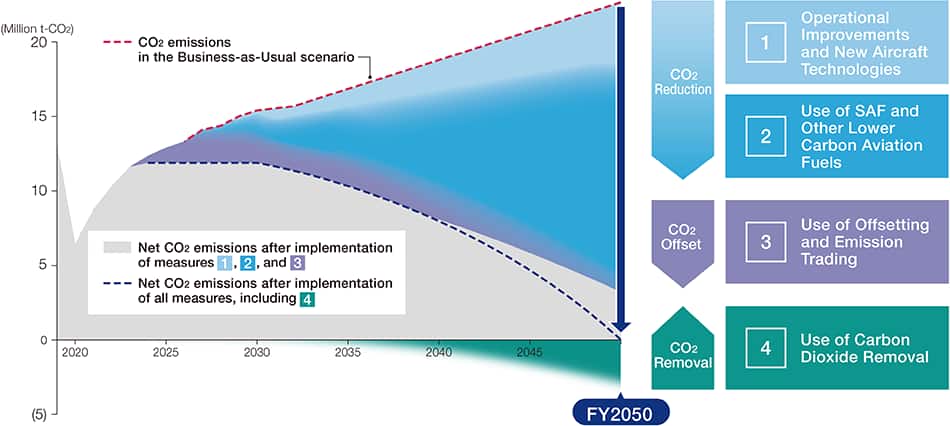
ANA Group has reviewed its mid-term environmental targets for FY2030 and transition strategy to achieve our decarbonization goals, and updated its transition scenario toward net zero by FY2050. By FY2030, we will reduce CO2 emissions on both international and domestic flights by at least 10% compared to FY 2019, net.
To achieve this goal, we will combine four strategic approaches (operational improvements and technological innovation of aircraft, etc., low-carbon aviation fuel through the use of SAF, emissions trading, and negative emission technologies*1), with the use of SAF at the core. We will achieve net zero by FY2050 while also pursuing compatibility with economic rationality.
- *1.Negative Emission Technologies(NETs): Capturing and sequestering CO2 from the atmosphere
Improving Flight Operation
Operational improvements contribute directly to reducing fuel consumption and CO2 emissions. The ANA Group, centered on its flight operations division, implements a wide range of measures across each phase of flight operations.
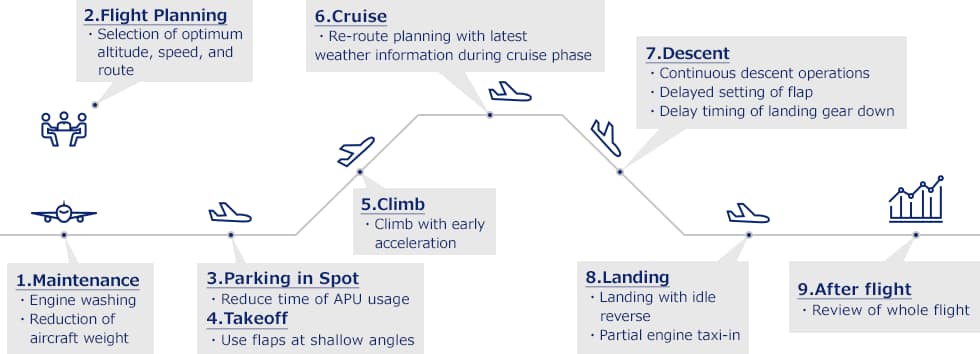
- 1.During Maintenance
- 2.Creation of Flight Plans
- 3.While parking Aircraft
- 4.Takeoff
- 5.During Climb
- 6.During Cruise
- 7.During Descend
- 8.Landing
- 9.Postflight
In addition to conventional initiatives such as early accelerated climb, reduced reverse thrust upon landing, and single-engine taxi-in, the Group commenced the quantification of fuel reduction effects achieved through flight path shortening in collaboration with air traffic control authorities in FY2024. Through this series of operational improvement measures, which also include appropriate aircraft weight management and the utilization of ground power units (GPUs) and pre-conditioned air (PCA) systems, the Group reduced CO2 emissions by approximately 126,500 metric tons in FY2025.
| FY | 2023 | 2024 | 2025 | |
|---|---|---|---|---|
| Target | Fuel (1,000kl) | 105 | 114 | 158 |
| CO2 (1,000t) | 83.0 | 90.0 | 125.0 | |
| Result | Fuel (1,000kl) | 114 | 158 | 158 |
| CO2 (1,000t) | 90.0 | 124.9 | 126.5 | |
- Measures
Early Acceleration and Flap Retraction during Takeoff/Reducing Thrust Reverser Usage/Single-Engine Taxiing/Shortening Flight Path/Other Measures
1.During Maintenance
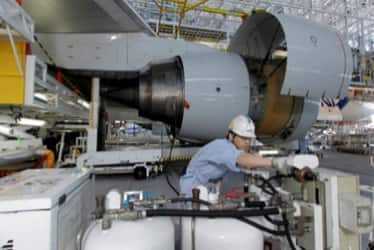
Water Cleaning Engines / Test Operations
The ANA Group has developed a unique vehicle for cleaning engine compressor parts. Engine compressor parts become dirty with each use, reducing fuel efficiency. Regular cleaning restores full engine function.
We have also revised test operations and introduced other efficiencies, saving 1% on annual fuel usage in test operations.
Reduction of Aircraft Weight
A lighter aircraft can fly on less fuel and reduce CO2 emissions. The ANA Group is working to optimize the amount of water supplied to aircraft and reduce the weight of onboard equipment.
For example, we are digitizing "TSUBASA -GLOBAL WINGS-" (in-flight magazine), changing the paper quality and reducing the number of pages for "Sky Shop"(shopping catalog), reviewing the amount of equipment, such as tableware and drinks, and removing the excess amount.
In addition, by digitizing manuals for both pilots and cabin crew, we were able to reduce the weight by 70%.

2.Creation of Flight Plans
Selection of Optimum Altitudes, Speed and Routes
Generally, fuel efficiency improves at higher altitudes due to lower air density, whereas excessive speed tends to increase fuel consumption. Because optimal conditions and routes fluctuate daily based on weather, pilots and dispatchers collaborate on every flight to select the most efficient altitude, speed, and flight path. For pilots operating multiple legs a day - such as on domestic routes - updated flight data is sent directly to their iPads between flights, allowing them to adjust and refine their flight plans using the latest real-time information.

3.While Parking Aircraft
Reducing the Time of Auxiliary Power Unit (APU) Usage
In addition to the wing-mounted engines, aircrafts are equipped with an Auxiliary Power Unit (APU) located in the tail. The APU provides the compressed air necessary for engine starts and cabin air conditioning, as well as the electrical power required while the aircraft is on the ground. However, because the APU burns jet fuel and generates CO2, we prioritize the use of Ground Power Units (GPUs). By connecting to these external ground-based sources for electricity and air conditioning while parked, we can significantly reduce APU runtime and lower our overall carbon emissions.
4.Takeoff
Reduced Flaps at Takeoff
Flaps are high-lift devices used to increase the wing's surface area and curvature during takeoff. While a higher flap setting allows an aircraft to lift off from shorter runways, it also generates significant aerodynamic drag, requiring higher thrust and increased fuel consumption to climb or accelerate. In contrast, when taking off from longer runways, pilots can use a "Reduced Flap" setting. This minimizes drag and fuel burn, leading to a more efficient ascent and a reduction in overall CO2 emissions.
5.During Climb
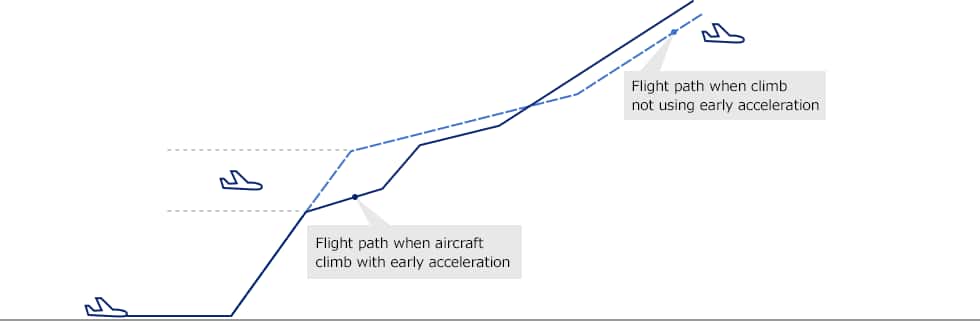
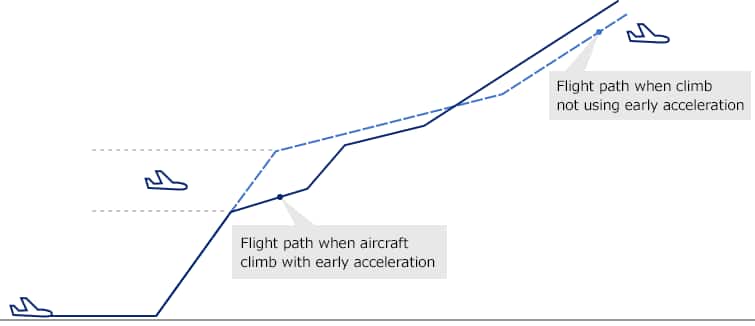
Climb with Early Acceleration
Climbing with acceleration at lower altitude after takeoff, retracting the flaps and reaching cruise altitude as soon as possible, enables to reduce fuel consumption.
6.During Cruise
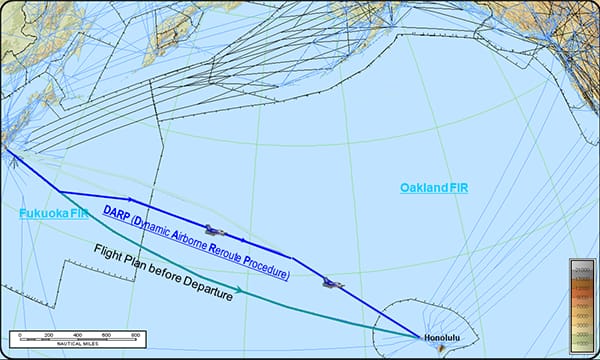
Reviewing Flight Paths during Flight Using the Latest Weather Information
In addition to creating a flight plan, the ANA Group checks weather information again after takeoff, and changes flight routes depending on the situation. This is called DARP (Dynamic Airborne Reroute Procedure).
This allows for more optimal fuel planning and flight routes, thereby reducing CO2 emissions.
7.During Descent
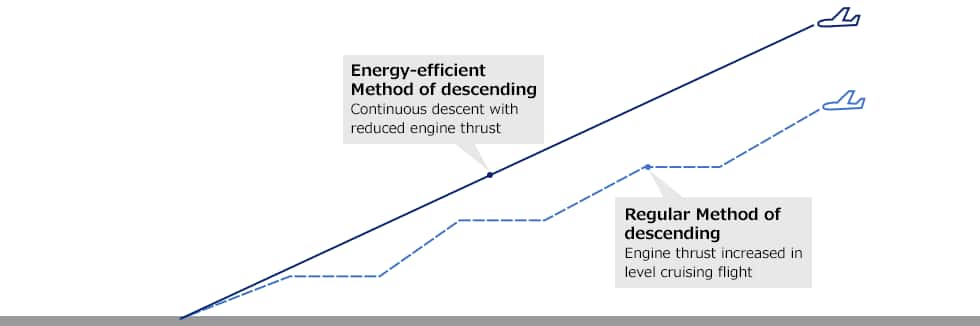
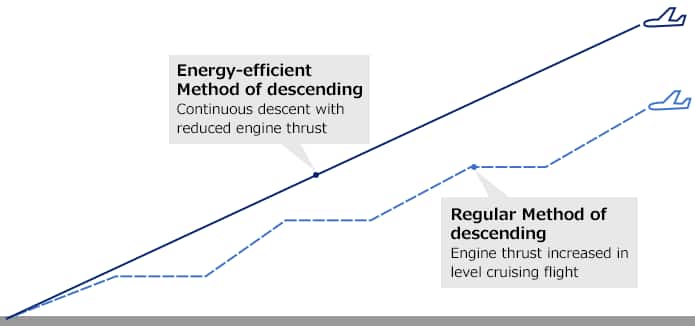
Promoting an Energy-Efficient Descent Method
Continuous Descent Operations (CDO) is an arrival method in which an aircraft descends continuously on a smooth, optimal profile from the top of descent to the final approach point. Compared to conventional stepped descents that reduce altitude in stages, CDO eliminates level flight segments during descent and minimizes engine thrust adjustments, thereby directly reducing fuel consumption and CO2 emissions while mitigating noise impacts in communities surrounding airports.
The ANA Group currently utilizes CDO during late-night and early-morning operations at Kansai International Airport (KIX) and is working with relevant authorities to expand its coverage to other airports.
Optimizing Flap Deployment Timing
To slow down for landing, aircrafts deploy flaps to increase lift and drag. However, because extending flaps significantly increases aerodynamic resistance, pilots delay deployment as long as safely possible. By maintaining a "cleaner" aerodynamic profile for a longer duration during the approach, we can reduce engine thrust requirements, thereby lowering fuel consumption and CO2 emissions.
Delayed Landing Gear Extension
Similarly, the landing gear creates substantial drag once lowered. To maximize efficiency, the extension of the landing gear is delayed until the final stages of the descent, provided all safety and stabilization criteria are met. Delaying the gear extension minimizes noise and fuel burn, contributing further to our carbon reduction goals.
8.Landing
Minimizing Thrust Reverser Usage
After touchdown, aircrafts utilize a combination of wheel brakes and thrust reversers to decelerate. While thrust reversers redirect engine airflow to slow the aircraft quickly, they require an increase in engine RPM, which consumes additional fuel. When runway length and safety conditions permit, pilots use "Idle Reverse" (lowering engine power during reversal). This practice reduces fuel burn, lowers CO2 emissions, and significantly minimizes noise pollution around the airport.
One-Engine-Taxi-In
Once an aircraft has exited the runway, a single engine often provides sufficient thrust for taxiing to the gate. After verifying weather conditions and the surrounding environment for safety, pilots may shut down one engine and taxi using only one engine. This technique—known as One-Engine-Taxi-In—meaningfully reduces ground-level fuel consumption and carbon emissions.
9.Postflight
As a postflight procedure, the ground staff reviews and analyzes the flight data, and utilizes it for daily operations as well as for reducing environmental impact.
Based on the group action guidelines "ANA's Way," the ANA Group honors employee-led proactive initiatives that contribute to value creation, brand enhancement, corporate culture reinforcement, and the fostering of group-wide unity through the "ANA's Way AWARDS."
By sharing and scaling outstanding best practices across various categories—such as "Safety" and "Sustainability"—the program promotes continuous operational and productivity improvements while strengthening a collaborative team spirit that spans beyond departmental and organizational boundaries.
Adopting New Aircraft Technologies
Introduction of Fuel-Efficient Aircrafts and Engines
As the global launch customer for the Boeing 787 Dreamliner, we celebrated a decade of its fuel-efficient service in 2021. As of June 2025, the ANA Group operates a fleet of 86 Dreamliners (across the -8, -9, and -10 variants) and continues to integrate state-of-the-art aircraft like the Airbus A320neo and A321neo. By the end of March 2025, fuel-efficient models will account for 82.7% of our jet fleet.
Looking ahead, we have finalized a purchase agreement for the Boeing 737-8, with deliveries scheduled for FY2026 and beyond. Our goal is to expand our Boeing 787 fleet to over 100 aircraft by FY2030 as part of our commitment to rapid fleet renewal. Furthermore, we are conducting a demonstration project to apply a "shark-skin" (riblet) filmOpens in a new window.In the case of an external site,it may or may not meet accessibility guidelines. to aircraft surfaces. This specialized finish reduces friction during flight, further driving down fuel consumption and CO2 emissions.
Airframe modifications
First aircraft with Riblet technology implementation in service
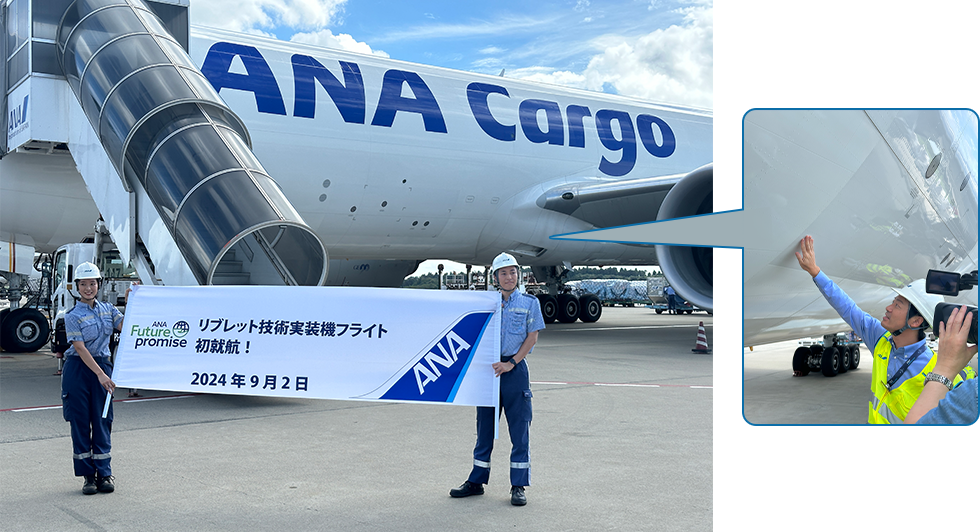
ANA is deploying "AeroSHARK," a riblet film technology jointly developed by Lufthansa Technik AG and BASF, on its Boeing 777 fleet.
ANA launched operations with the first AeroSHARK-equipped aircraft, a dedicated freighter, in September 2024, followed by a second aircraft—and its first passenger plane (Registration: JA796A)—on international routes in April 2025. ANA is the world's first airline to implement this technology across both freighter and passenger variants of the Boeing 777.
By reducing aerodynamic skin friction drag on the aircraft surface, the technology is estimated to reduce annual fuel consumption by approximately 250 metric tons and CO2 emissions by approximately 800 metric tons per aircraft. *Note: Estimated maximum effect calculated by Lufthansa Technik AG based on ANA's average annual flight hours.
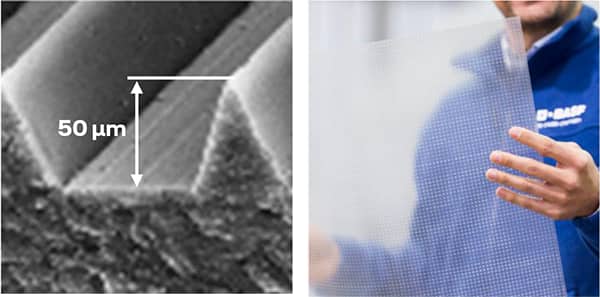
What is AeroSHARK?
AeroSHARK, a joint development by Lufthansa Technik and BASF, is a functional surface film inspired by the drag-reducing structure of sharkskin.
Equipping Aircraft with Winglets
In 2010, the ANA Group became the first airline in Japan to equip Boeing 767-300ER aircraft with winglets. Today, these retrofitted international-specification aircraft continue to operate, helping reduce CO2 emissions by approximately 14,700 tonnes annually.
Implementation of Next-Generation Paint Systems
We are adopting an advanced, next-generation paint system that provides superior durability and weather resistance compared to traditional coatings. This system is formulated with low volatile organic compounds and results in a lighter overall aircraft weight, further contributing to our efficiency goals.
Reducing the Weight of Cabin Seats
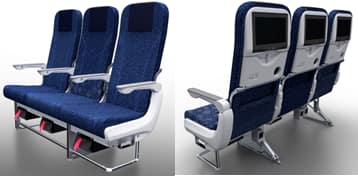
In a strategic partnership with Toyota Boshoku Corporation, the ANA Group developed a new standard of seats for domestic routes. By merging our operational expertise as an airline with Toyota Boshoku’s decades of automotive seating craftsmanship, we created a product that balances our technical requirements with a premium passenger experience. These seats align with our philosophy for passengers to have a lasting impression, while achieving a weight reduction of 195 kilograms per aircraft compared to previous models. This innovation alone saves approximately 15 kiloliters of fuel per aircraft annually - all without compromising passenger comfort.
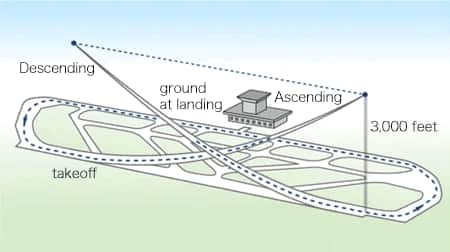
ICAO Landing and Take-Off Cycle
The ICAO Landing and Take-Off (LTO) cycle defines the flight phases from take-off up to an altitude of 3,000 feet, and conversely, from 3,000 feet down to landing. Engine emissions are strictly measured within this specific operational window. The certification process evaluates engine performance based on standardized thrust output settings and specific durations of operation for each phase of the cycle.
| Output Conditions |
Rated Output (%) |
Operating Time (Minutes) |
|---|---|---|
| Take-Off | 100 | 0.7 |
| Ascending | 85 | 2.2 |
| Descending | 30 | 4.0 |
| Ground Taxiing |
7 | 26.0 |
Utilization of Lower Carbon Fuel including SAF
SAF is a key pillar of ANA’s decarbonization roadmap. Our goal is to integrate 10% SAF into our operations by FY2030 and achieve near-total low-carbon fuel usage by FY2050. We are currently working at the national level with government and private partners to accelerate the production and stable supply of Japanese-made SAF.
| 2011 |
|
|---|---|
| 2019 |
|
| 2020 |
|
| 2021 |
|
| 2022 |
|
| 2023 |
|
| 2024 |
|
| 2025 |
|
Click here to learn more about the detail
Use of Offsetting and Emission Trading
To comply with global regulations like CORSIA and ETS, the ANA Group utilizes emissions trading as a supplemental measure. These carbon credits serve as a temporary solution to offset emissions that cannot yet be eliminated through current operational improvements. Our definitive goal remains to reach net zero by FY2050 through direct emission reductions, eventually phasing out the use of trading schemes entirely.
Utilization of Negative Emissions Technologies (NETs)
The ANA Group believes that Carbon Dioxide Removal (CDR) using these NETs(Negative Emission Technologies)*1 is essential to offset the "residual emissions" that remain even after maximizing direct reductions through measures like introducing SAF, in order to achieve net zero by FY 2050.
As a forward-looking, pioneering action, ANA Group is advancing the utilization of Direct Air Capture (DAC)*2. In 2023, we concluded a procurement agreement with 1PointFive*3 in the United States for CDR credits derived from DAC.
Under our mid-term management plan, we will continue exploring ways to secure effective removal methods while carefully assessing technological maturity and changes in the external environment. Looking ahead, we will pursue both sustainable growth and achieving "Net Zero by FY2050" by optimally combining these innovative carbon removal technologies with the emission reduction measures being implemented across the ANA Group.
- *1.Negative Emission Technologies(NETs): Capturing and sequestering CO2 from the atmosphere
- *2.Direct air capture (DAC): Technology to capture CO2 directly from the atmosphere.
- *3.1PointFive:
1PointFive is committed to reducing global temperature rise by 1.5 °C by 2050 through decarbonization solutions, including Carbon Engineering’s DAC technology, AIR TO FUELS™ technology, and geological storage hubs. AIR TO FUELS™ is a registered trademark of Carbon Engineering Ltd.
External Initiatives
The ANA Group has established a management system and executive-level governance framework to ensure alignment with the goals of the Paris Agreement (1.5°C target) in its climate-related lobbying activities and participation in industry associations.
Executive-Level Governance Framework
The ANA Group positions addressing climate change as a key management priority. In collaboration with external stakeholders—including government agencies, international organizations, and industry associations—we are advancing efforts toward the decarbonization of the aviation sector.
Specifically, we contribute industry expertise and policy recommendations by participating in initiatives on future air traffic systems involving the Ministry of Land, Infrastructure, Transport and Tourism (MLIT), activities related to the Committee on Aviation Environmental Protection (CAEP) under the International Civil Aviation Organization (ICAO), and ongoing discussions surrounding Sustainable Aviation Fuel (SAF).
The ANA Group actively participates in key industry organizations, including the International Air Transport Association (IATA), the Association of Asia Pacific Airlines (AAPA), Star Alliance, and the Sustainable Aviation Fuel Users Group (SAFUG). Within IATA, ANA’s President serves on the Board of Governors (BOG) and is involved in environmental advisory bodies, actively driving efforts to address climate and environmental challenges across the aviation sector.
These climate change initiatives are driven under a governance framework where the "Group ESG Promotion Committee"—overseen by the President and CEO of ANA HOLDINGS INC. and chaired by the Chief ESG Promotion Officer (CEPO)—meets four times a year to discuss key policies and monitor progress against targets. Critical environmental issues impacting business strategy are deliberated by the "Group Management Strategy Committee" and submitted to the "Board of Directors." The Board of Directors establishes group-wide management policies and targets, including those concerning climate change, while supervising executive operations across all Group companies.
Furthermore, to secure a stable supply of Sustainable Aviation Fuel (SAF)—which is essential for decarbonization—the ANA Group actively engages in policy advocacy with the Japanese government, and our input has been reflected in its "Clean Energy Strategy (Interim Report)." Going forward, we will continue to drive the decarbonization of our air transport operations through ongoing dialogue and collaboration with relevant organizations.
【Specific Initiatives with External Organizations and Industry Associations】
CARATS (Collaborative Actions for Renovation of Air Traffic Systems)
ANA actively participates in CARATS (Collaborative Actions for Renovation of Air Traffic Systems), an industry-academia-government framework led by Japan’s Ministry of Land, Infrastructure, Transport and Tourism (MLIT) to build future air traffic systems. Guided by a long-term vision targeting 2040, concrete measures are currently being developed to enhance safety and operational efficiency while meeting CO2 reduction targets toward aviation decarbonization.
Drawing on our operational track record and expertise as a Japanese carrier, ANA provides strategic recommendations for system development and participates in key committees, such as the CO2 Reduction Promotion Subgroup. At the operational level, we are accelerating the early rollout of efficient flight practices, notably through a flight-plan optimization system that leverages real-time weather and flight data.
To adapt to the increasing severity of extreme weather linked to climate change, we operate an operational decision-support system utilizing advanced weather forecasting and AI. Developed in partnership with external experts and BlueWX-a spin-off born from joint research with Keio Universityー this system accurately navigates flights around unpredictable turbulence and severe weather. This lowers environmental impact while strengthening operational resilience to prevent delays and cancellations.
Looking ahead to global trends, including alignment with next-generation air traffic systems in the US (NextGen) and Europe (SESAR), ANA will continue to support the realization of a seamless air traffic control network that enables real-time information sharing, contributing to a reduced environmental footprint and a sustainable future for aviation.
ICAO (International Civil Aviation Organization)
ANA actively participates in discussions on international standards and rule-making at the International Civil Aviation Organization (ICAO), leveraging our insights as a Japanese carrier. For many years, we have dispatched technical experts to the Delegation of Japan to ICAO. As an advisor to Japan's Ministry of Land, Infrastructure, Transport and Tourism (MLIT), we consistently participate in meetings of the Committee on Aviation Environmental Protection (CAEP) and its subgroups, including the CORSIA, Aviation Fuels, and Long-Term Aspirational Goal working groups. To help realize the international aviation sector's Long-Term Aspirational Goal (LTAG) of net-zero carbon emissions by 2050, we provide actionable recommendations and advice on designing emission reduction frameworks and establishing eligibility criteria for CORSIA Eligible Emissions Units.
Deepening this commitment, in 2026, the ANA Group Chief Sustainability Officer (CSO) was appointed as the Japanese representative for the ICAO Global Ambassador program. In this role, our CSO supports public outreach and next-generation career development initiatives aimed at achieving the ICAO Strategic Plan 2026-2050. Through ongoing collaboration with international organizations and governments, ANA remains dedicated to advancing the sustainable growth and development of the aviation industry.
IATA (International Air Transport Association)
ANA actively engages in discussions shaping global standards and sustainability policies within the International Air Transport Association (IATA), representing the world's leading commercial airlines. ANA's President and CEO serves on the IATA Board of Directors, the organization's primary decision-making body, and contributes to dialogues on key industry policies through the Industry Strategy and Policy Committee (ISPC).
As an elected member of the Sustainability Industry Committee, ANA drives tackling challenges initiatives and policy advocacy aimed at decarbonizing the aviation sector through regular meetings and active engagement.
Leveraging our insights as a Japanese carrier, we provide practical expertise on navigating international frameworks. Specifically, we contribute to accelerating the widespread adoption of Sustainable Aviation Fuel (SAF) and building effective, industry-wide mechanisms for ICAO's CORSIA (Carbon Offsetting and Reduction Scheme for International Aviation). Through these ongoing efforts, ANA continues to play a vital role in the sustainable development of the global aviation industry.
AAPA (Association of Asia Pacific Airlines)
ANA contributes to advancing environmental policies and sustainability strategies tailored to regional challenges within the Association of Asia Pacific Airlines (AAPA), which represents major carriers in the Asia-Pacific region. Currently serving as Vice Chair of the association's executive board for FY2026 and slated to assume the position of Chair in FY2027, ANA actively leads the association's decision-making processes and region-wide dialogues.
On the environmental front, through platforms such as the Environment Committee, we lead dialogues aimed at expanding Sustainable Aviation Fuel (SAF) adoption and encouraging CORSIA participation across the region. Taking into account the region’s distinct energy landscapes and geographical characteristics, ANA provides insights as a Japanese carrier to achieve practical, region-wide decarbonization while strengthening collaboration among member airlines.
Star Alliance
As a member of the Chief Executive Board (CEB)—the highest decision-making body of Star Alliance, the world’s largest airline alliance—ANA plays an active role in shaping strategic direction across the alliance.
In the sustainability field, we leverage this robust network of member airlines to share leading-edge insights, identify key challenges, and evaluate actionable initiatives to reduce environmental impact. By maximizing collaboration that extends beyond the scope of an individual airline, ANA is committed to strengthening international partnerships to address global environmental challenges.
GOBLEU Project: Collaboration with JAXA for Enhanced Greenhouse Gas Observation
Since 2020, ANA Group has been advancing the "GOBLEU Project" in collaboration with the Japan Aerospace Exploration Agency (JAXA) to enhance greenhouse gas monitoring. This pioneering initiative leverages the unique operational profile of scheduled commercial aircraft—which fly at lower altitudes than satellites—to conduct detailed remote sensing of atmospheric composition near the Earth's surface.
In December 2025, following cabin modifications on a Boeing 737, we launched the world's first continuous, automated observation of atmospheric composition from inside a scheduled commercial passenger flight using remote sensing technology*. Building on this milestone, in March 2026, the Japanese government's Space Strategic Fund selected our technology development initiative for official support. This project aims to seamlessly link next-generation Earth observation satellites, commercial aircraft, and ground networks to monitor carbon dioxide emissions and absorption by source with high precision.
Through this series of initiatives, ANA aims to provide robust scientific evidence to drive greenhouse gas reductions and help establish highly transparent, international environmental evaluation standards.
- Remote sensing technology detects and measures the physical characteristics of an area or object from a distance without making physical contact.
Participation in Government Committees and the Development of a Decarbonization Roadmap
To advance decarbonization and enhance the international competitiveness of Japan's aviation sector, ANA actively participates in key study panels hosted by the national government.
As a formal member of the "Study Panel on CO2 Reduction in Aircraft Operations," we engage in discussions on comprehensive CO2 reduction measures across aircraft operations toward realizing a decarbonized society by 2050. Furthermore, we serve as an observer on the "Study Panel on CO2 Reduction in the Airport Sector," which promotes the electrification of airport facilities and ground handling vehicles alongside renewable energy adoption. Through these combined efforts, we are driving the implementation of concrete decarbonization measures across both flight operations and ground infrastructure.
Building a SAF Supply Chain via the Public-Private Council for the Promotion of Domestically Produced SAF
Domestically produced SAF is critical not only for decarbonization but also for national energy security. To build a robust domestic production base and establish a globally competitive supply infrastructure, ANA’s Executive Officer in charge of Green Transformation (GX) has served as a formal member of the "Public-Private Council for the Promotion of Sustainable Aviation Fuel"—jointly established by the Ministry of Land, Infrastructure, Transport and Tourism (MLIT) and the Ministry of Economy, Trade and Industry (METI)—since its inception.
At the operational level, ANA actively participates as a formal member of the council's "Task Force on Further Measures for Promoting SAF Introduction" and the "Distribution Working Group," while also serving as an observer on the "Expert Panel on Sustainable Aviation Decarbonization." To accelerate SAF adoption, we collaborate with stakeholders to address technical and economic challenges, thereby contributing to the design of concrete policy frameworks. Specifically, we engage in discussions on regulatory measures—such as SAF supply mandates for fuel providers—and the creation of highly effective cost-sharing mechanisms for users, working to build a comprehensive foundation for widespread SAF adoption.
Driving Environmental Initiatives and Public Outreach Through Industry Collaboration
In alignment with these government policies, ANA advances environmental initiatives among member airlines within the framework of the Scheduled Airlines Association of Japan, working in collaboration with organizations such as the Japan Association of Travel Agents (JATA). When ANA's President and CEO served as Chairman of the association (a rotating leadership role), our President and CEO delivered a keynote address aimed at driving the industry toward its goal of carbon neutrality by 2050.
Additionally, ANA sends committee members and researchers to bodies such as the Japan Transport and Tourism Research Institute's "Research Committee on Climate Change Countermeasures in Aviation." Through presentations at domestic and international commercial aviation symposia and public awareness campaigns, we actively support the Japanese aviation industry's efforts to reduce its environmental footprint from both academic and research perspectives.
Deploying Advanced Technologies to Improve Fuel Efficiency
To enhance fleet fuel efficiency and reduce environmental impact, ANA collaborates with global partners to implement cutting-edge technologies across our aircraft.
In a world first, ANA introduced "AeroSHARK"—a riblet-textured surface film—on both Boeing 777 freighters and passenger aircraft. By reducing aerodynamic drag across the aircraft surface, this technology is projected to save approximately 250 metric tons of fuel and reduce annual CO2 emissions by roughly 800 metric tons*. This pioneering initiative has earned high external recognition, winning the Advanced Technology Award at the 26th Logistics Environment Awards.
- Maximum projected impact calculated by Lufthansa Technik based on ANA’s average annual flight hours.
Public-Private Partnerships & Dialogue with Manufacturers for Next-Generation Aircraft
With a view toward the future commercial deployment of zero-emission aircraft, ANA is laying the groundwork to adopt next-generation technologies over the medium to long term.
Participating in key panels hosted by Japan’s Ministry of Economy, Trade and Industry (METI)—including the Public-Private Council for New Technologies toward Aircraft Decarbonization and the Aircraft Industry Subcommittee—we help shape the strategic direction for both the growth and environmental sustainability of Japan's aviation industry.
Furthermore, through ongoing dialogue with leading aircraft manufacturers such as Airbus and Boeing, ANA tracks developments in hydrogen and electric flight technologies. This enables us to proactively identify key challenges, such as infrastructure readiness, required for future implementation.
Earth Observation Innovation Through Space and Aviation Integration
Leveraging our extensive flight network as vital infrastructure, ANA Group is actively driving science-based climate action.
In a joint project with the Japan Aerospace Exploration Agency (JAXA), we launched the world’s first continuous, automated observation initiative utilizing remote sensing technology* from inside the cabin of a Boeing 737 aircraft to monitor atmospheric composition. Furthermore, this series of technology development initiatives was selected for support under the Japanese government's Space Strategy Fund.
By developing high-precision monitoring technology that seamlessly links next-generation Earth observation satellites, commercial aircraft, and ground networks, ANA provides robust scientific evidence to advance greenhouse gas reduction while contributing to the establishment of transparent, international environmental evaluation standards.
- Remote sensing technology detects and measures the physical characteristics of an area or object from a distance without making physical contact.
Joining International Initiatives & Advancing Global Industry Partnerships
ANA Group actively engages in activities hosted by the World Economic Forum (WEF), a platform that brings together leaders across politics, business, and academia.
Our executive leadership regularly represents ANA on global stages, including the WEF Annual Meeting in Davos, where they engage in close exchanges with WEF leadership. Through participation in the CEO Meeting of "Airports for Tomorrow" under the umbrella of WEF, and ongoing involvement in workshops such as "SAF premium and narrative: workshop," ANA stays at the forefront of evolving global environmental regulations and sustainability trends. These efforts allow us to gain valuable insights that enhance our environmental management strategies, extending beyond traditional airline alliance frameworks.
Leading "ACT FOR SKY": Cross-Industry Collaboration to Promote Domestically Produced SAF
In alignment with global discussions, ANA serves as a founding member of "ACT FOR SKY," a voluntary cross-industry coalition dedicated to promoting the adoption of domestically produced Sustainable Aviation Fuel (SAF) in Japan.
The coalition's membership has expanded to 53 companies (as of June 2026). ANA takes a leading role by hosting quarterly meetings and raising critical issues at cross-sector symposiums. Furthermore, we spearhead working group activities centered on key topics highly emphasized in global markets—such as accelerating the use of "Book & Claim" systems (for transferring environmental attributes) and addressing Scope 3 supply chain emissions. Through these initiatives, ANA remains committed to achieving the practical and steady deployment of a domestic SAF supply chain in Japan.
Promoting Advocacy and Mutual Understanding in the Asia-Pacific (ASEAN) Region
Leveraging insights gained through collaboration with international bodies and domestic industries, ANA Group actively contributes to building regional partnerships across neighboring countries.
At the 52nd ASEAN Air Transport Working Group (ATWG) and related meetings, ANA presented at an event hosted by the Civil Aviation Authority of Thailand (CAAT), the host nation. By sharing the ANA Group’s environmental initiatives on this platform, we not only enhanced our corporate presence but also helped foster a deeper understanding among Southeast Asian nations regarding Japan’s unique market dynamics and infrastructure landscape for aviation decarbonization.
SAF Flight Initiative (SFI)
ANA offers the "SAF Flight Initiative (SFI)," a program designed to provide passengers and cargo shippers with the environmental value of Scope 3 emissions reduction in air transport.
Launched in October 2021 as the "Cargo Program" to reduce CO2 emissions in freight transport and logistics, the initiative expanded in 2022 with the addition of the "Corporate Program," covering emissions from corporate business travel. By passing along the environmental value of SAF to corporate clients, ANA drives cross-industry adoption of SAF. Participating companies receive third-party certified CO2 Reduction Certificates corresponding to their passenger and cargo usage.
A key feature of the Cargo Program is the inclusion of a tripartite agreement model alongside traditional bilateral contracts between ANA and freight forwarders. Under a standard bilateral contract, directly transferring environmental value to individual end-shippers beyond the forwarder was difficult. The new tripartite framework allows ANA to enter agreements with individual shippers via forwarders, enabling flexible allocation of environmental value tailored to shipper needs and significantly broadening the program's reach.
Furthermore, in June 2026, ANA launched the "Personal Program," extending participation to individual passengers alongside corporate clients in cargo and travel management. This program responds to rising environmental consciousness among individual travelers who—while not subject to global Scope 3 disclosure mandates—still seek to mitigate the carbon footprint of their flights. Built into a user-friendly system similar to standard ticket purchasing, passengers simply enter their route and travel class, select their preferred SAF purchase amount, and complete the transaction.
Although the Personal Program does not include the third-party certification provided under the corporate Cargo and Corporate Programs, customers receive a "Purchase Certificate" clearly specifying their CO2 reduction, offering transparent insights into how their choice directly contributes to lowering carbon emissions.
Utilizing Emissions Trading Schemes (Allowances and Carbon Credits)
To lower aircraft CO2 emissions, ANA prioritizes operational enhancements and SAF adoption while leveraging emissions trading schemes as a complementary measure for hard-to-abate emissions.
In international aviation, we are strategically securing eligible credits to meet CORSIA compliance obligations. Market options continue to broaden, with approximately 38 million metric tons of eligible units approved as of the end of June 2026. In the same month, ANA joined an IATA-led international framework*1 as an inaugural member to foster a reliable supply of CORSIA Eligible Emissions Units (EEUs). Through our participation, ANA will ensure sound procurement and management practices while supporting market supply and industry-wide climate goals.
For domestic aviation, ANA calculated and reported its FY2025 CO2 emissions under the GX League framework. Although no trading occurred in FY2025 prior to the FY2026 launch of Japan’s GX-ETS, we are making steady preparations for full alignment with the new system.
- *1.Supporting Alliance for CORSIA EEU Supply
Deployment of Negative Emission Technologies (NETs)
To achieve net-zero carbon emissions by 2050, ANA is advancing the deployment of Negative Emission Technologies (NETs)—which physically remove CO2 from the atmosphere and permanently store it—alongside atmospheric carbon removal credits. The third edition of Waypoint 2050, issued by IATA and ATAG*2, underscores the necessity of removing residual emissions that persist even after maximizing the use of SAF and other reduction measures. This framework frames a strategic pivot—transitioning from traditional emission avoidance and reduction credits to carbon removal credits—as a vital, industry-wide long-term imperative.
To expand our strategic options, ANA is broadening its portfolio beyond Direct Air Capture (DAC) credit purchases to incorporate high-durability solutions such as biochar, building multifaceted expertise from an early stage. In FY2025, through our corporate venture capital (CVC) activities and related initiatives, we invested in US-based Terraton Industrial, a company operating a platform that streamlines biochar project launches and credit generation. Looking ahead, ANA will remain aligned with global trends, contributing to the commercialization of promising technologies and the expansion of market supply.
- *2.Air Transport Action Group
Review Process for Alignment with the Paris Agreement
To ensure that the policies and activities of industry associations and initiatives we participate in align with our climate strategy and the goals of the Paris Agreement (such as the 1.5°C target), we operate a rigorous review process through our Total Risk Management (TRM) system. Specifically, we comprehensively evaluate and monitor the climate stances and policy positions of each industry organization annually, confirming at the executive level that there are no misalignments with our decarbonization transition scenarios (e.g., 1.5°C scenario) established based on the TCFD recommendations. The evaluation results are reported semi-annually to bodies such as the Group Management Strategy Committee, supported by a framework to promptly escalate any identified misalignments.
Escalation Framework for Misaligned Positions
If a periodic review reveals that the climate policies or activities of an industry association we belong to conflict with (are misaligned with) our climate strategy or the goals of the Paris Agreement, the Group Management Strategy Committee promptly deliberates on appropriate responses. Led by the Officer in charge of ESG, we take decisive action in accordance with the following defined escalation framework:
Step 1
Identification of Misalignments: Clarify any discrepancies (mismatches) between the industry association’s position and the ANA Group’s stance.
Step 2
Assessment of Root Causes: Evaluate the background and underlying reasons for the misalignment.
Step 3
Outlook Assessment: Determine whether the industry association has scope for transformation, as well as the direction and timeline for such change.
Step 4
Actionable Proposals and Consensus: Propose concrete approaches to the association to resolve the misalignment and reach agreement on corrective measures.
Step 5
Progress Monitoring: Continuously monitor progress against the agreed-upon corrective measures.
If no policy improvements are observed despite ongoing engagement, we will, as a measure of last resort, suspend financial contributions or withdraw from the association entirely.
【Alignment Review Results (FY2025 Track Record)】
In our most recent review (conducted in fiscal 2025), no misalignments with the 1.5°C target of the Paris Agreement were identified among the major industry associations to which we belong (zero applicable cases).
Climate Policy Positions and Expenditures
The ANA Group consistently supports the implementation of public policies aimed at decarbonizing the aviation industry.
【Specific Policy Positions】
We actively engage in policy advocacy for climate change measures, centered on accelerating the adoption of Sustainable Aviation Fuel (SAF). Beyond supporting a stable supply and cost reduction for domestically produced SAF through initiatives like the "Public-Private Council for Promoting the Adoption of Sustainable Aviation Fuel," we continuously advocate to the government for legislative frameworks based on a "Japanese Model" that fairly shares transition costs across society. Furthermore, from a broader environmental perspective, we consistently express our support for public policies regarding biodiversity conservation and carbon pricing schemes—including Japan's domestic GX-ETS—provided these mechanisms foster healthy market development.
【Ensuring Transparency in Industry Association Involvement】
To guarantee transparency in our policy engagement, we disclose our membership status and activity track record across key industry associations involved in shaping climate policy, including the International Air Transport Association (IATA).
| Policy Domain | ANA Group Stance | Primary Engagement Channels |
|---|---|---|
| SAF Promotion & Domestic Supply Chain Construction | Actively Support | Public-Private Council for SAF, ACT FOR SKY |
| Japanese SAF Cost-Sharing Model Leadership | Actively Support & Advocate | Direct Government Proposals, Input into Clean Energy Strategy |
| GX-ETS (Domestic Emissions Trading System) | Support | GX Promotion Council Proposals |
| CORSIA (International Aviation Carbon Offsetting Scheme) | Comply & Actively Participate | ICAO CAEP, IATA |
| Carbon Pricing Overall | Support (Premised on Sound System) | Industry Associations, Government Panels |