


2025/08/08
TOKYO, April 26, 2025—All Nippon Airways (ANA) became the first company in Asia to use AeroSHARK,*1 an innovative riblet film developed by Lufthansa Technik and BASF, on its Boeing 777 passenger aircraft. This represented the second application of this technology following the initial use on its freighter in September 2024, and has made ANA the world's first airline to apply the technology on Boeing 777 aircraft in both service categories.
-
*1.Aircraft application of the riblet film technology developed by Lufthansa Technik and BASF
Energy-saving effect of riblet film
Riblet film features a rib structure inspired by a similar pattern present on sharkskin, and has a thickness of around 50 micrometers. The entire fuselage covered with this film is expected to reduce aircraft drag, bringing about annual savings of approximately 250 metric tons of fuel and 800 metric tons of CO2 for each aircraft.*2
In the aviation sector—which is still at an early stage of development in CO2 emissions reduction technology—the riblet film implemented for ANA's operations has demonstrated its performance of a 1% reduction in fuel consumption and CO2 emissions.
-
*2.Maximum effect estimated by Lufthansa Technik based on the annual average flight hours per aircraft operated by ANA.
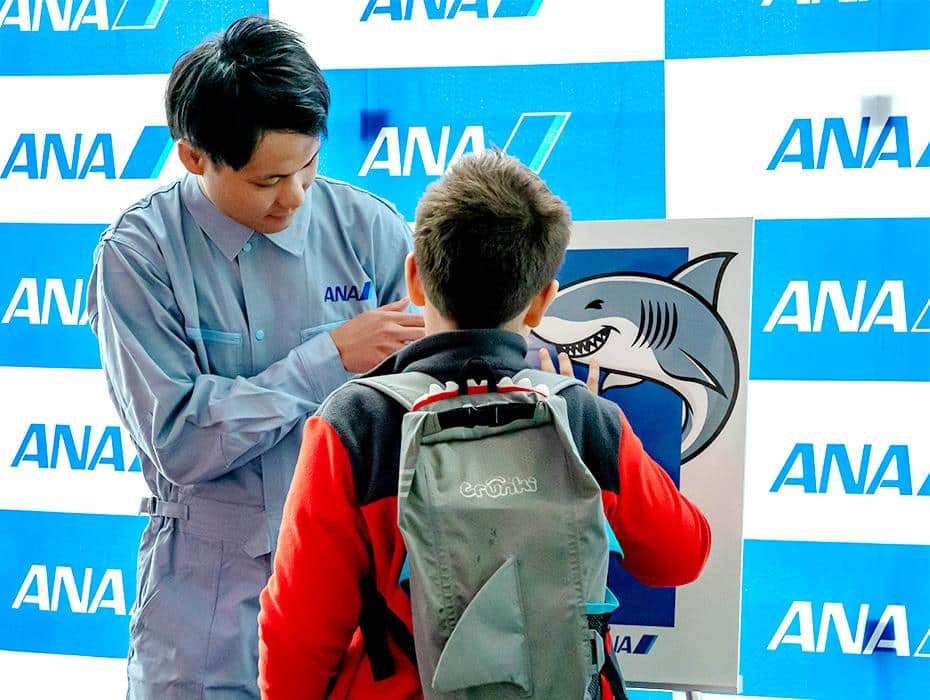
To promote the innovative development, an event was held on the day of NH211's departure from HND to LHR for the first passenger flight on the modified aircraft. Panels showcasing the riblet film used in the aircraft were set up around the boarding gate before the departure, with ANA's maintenance technicians explaining to passengers about the film's effects and performance. The event was received well, particularly by some who showing interest by checking for the texture and enjoying conversations with technicians.
Received the 26th Logistics Environment Award for Advanced Technology
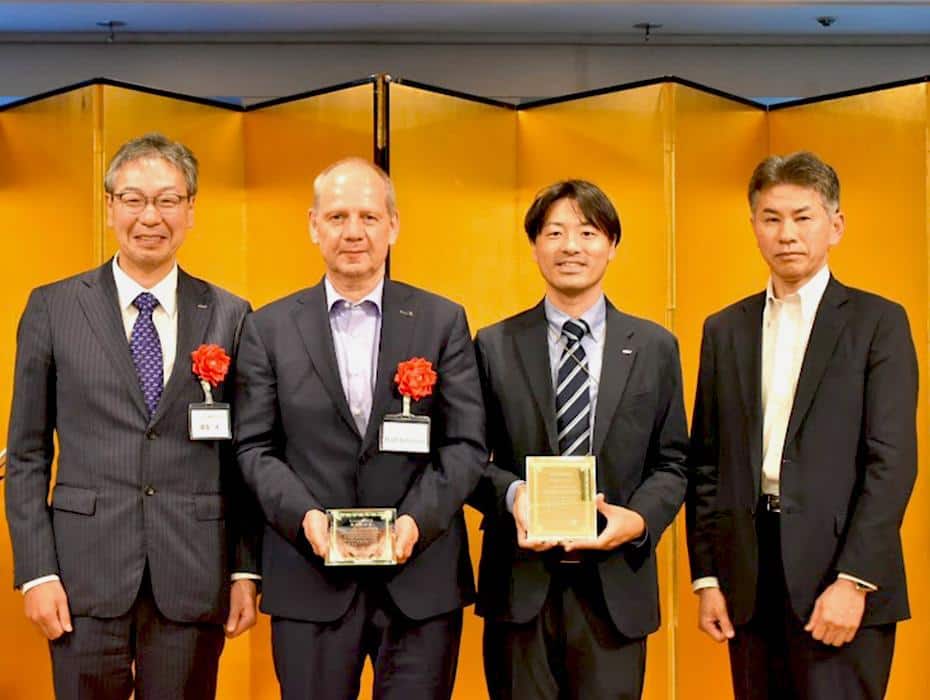
In recognition of the recent introduction of aircraft featuring AeroSHARK, ANA and Lufthansa Technik received the Advanced Technology Award*3 during the 26th Logistics Environment Award, hosted by the Japan Association for Logistics and Transport. Commendation was given specifically to the advanced technology that enables a significant reduction of CO2 emissions from aircraft operation and the application of the technology independently to freighter and passenger aircraft. These are considered pioneering efforts for the reduction of CO2 emissions in the air cargo transport industry.
-
*3.This award is conferred upon businesses or other organizations for making contributions to the sound development of logistics activities by engaging in advanced technology development for the sophistication, efficiency, or digitalization of logistics operations as well as the reduction of the related environmental impact. It also awards the utilization of such advanced technology developments to create functions that reduce the environmental impact stemming from logistics systems and transportation equipment and facilities, as well as other measures.
Comment from the head of the riblet film implementation project
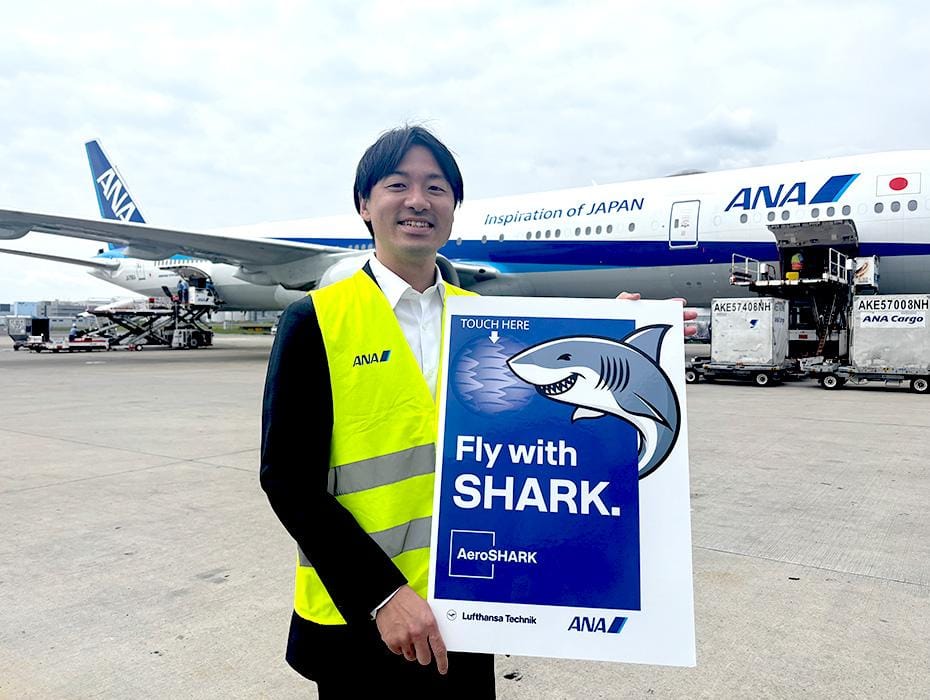
"It's a great honor that we were offered the Advanced Technology Award at the 26th Logistics Environment Award. I'm very proud the riblet film technology and the related endeavor of the Company have been highly recognized by the industry. This has also given me a strong motivation for taking on new challenges to contribute to reducing environmental impact going forward."
View a short video on the activities of the riblet film implementation project led by Mr. Matsui, who served as both head and engineer: (Japanese Only)

The ANA Group will remain committed to making technological innovations aimed at CO2 emissions reductions and the effective utilization of limited resources.