



2025/10/24
We would like to introduce the ANA Farm Project that the ANA Akindo Hiroshima Branch of the ANA Group is working on together with the local community.
What is the ANA Farm Project?
This project aims to help ANA Akindo Co., Ltd. (hereinafter "ANA Akindo") co-create new value with local communities by promoting regional revitalization through farming. Its Hiroshima Branch focuses on locally grown Hiroshima lemons and organizes product development and lemon-picking tours in collaboration with local farmers. The company's goal is to serve as a bridge between local agriculture and consumers by leveraging the ANA Group's unique communication power, while taking on the challenge of addressing various social issues. We will continue to help develop regions with lasting viability centered on food and tourism through the ANA Farm Project.
Hiroshima Regional Revitalization Project: Lemon Farming
In primary industries such as agriculture, forestry, and fisheries, securing the next generation of workers is a major challenge. As part of our efforts to help address these regional issues, we collaborate with Hiramoto Shoten, a town development company based in Mihara City, Hiroshima, to work on initiatives to revitalize primary industries and the local community, with a focus on lemon farming.
(1) Lemon-picking tours
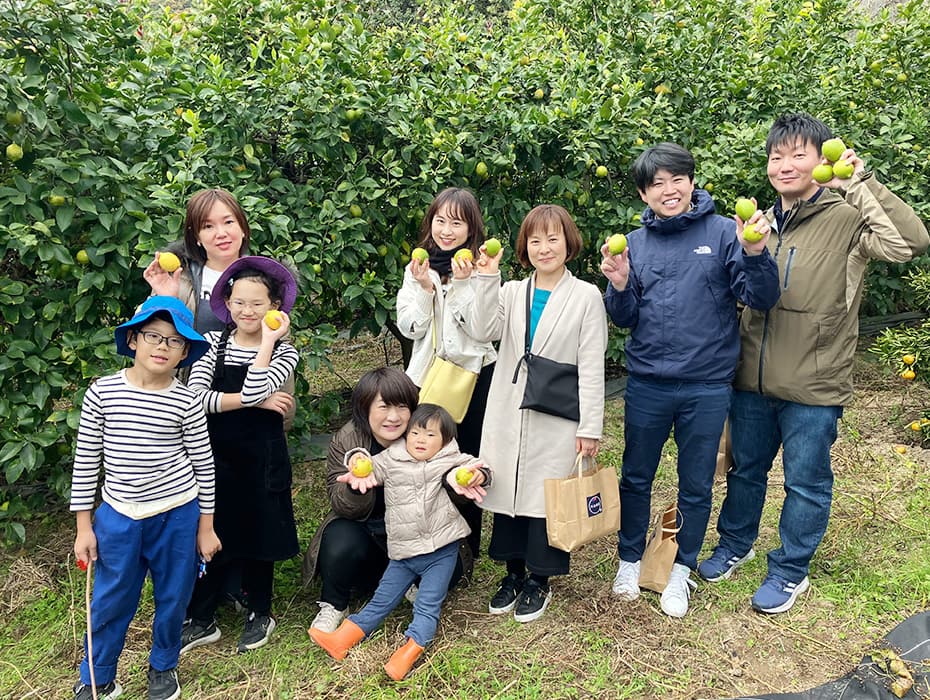
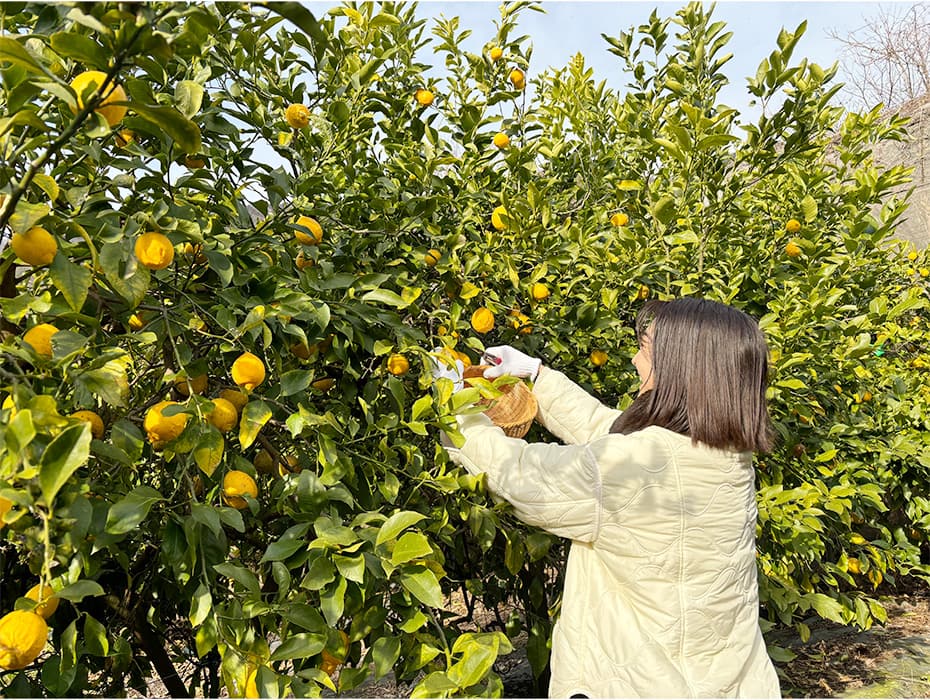
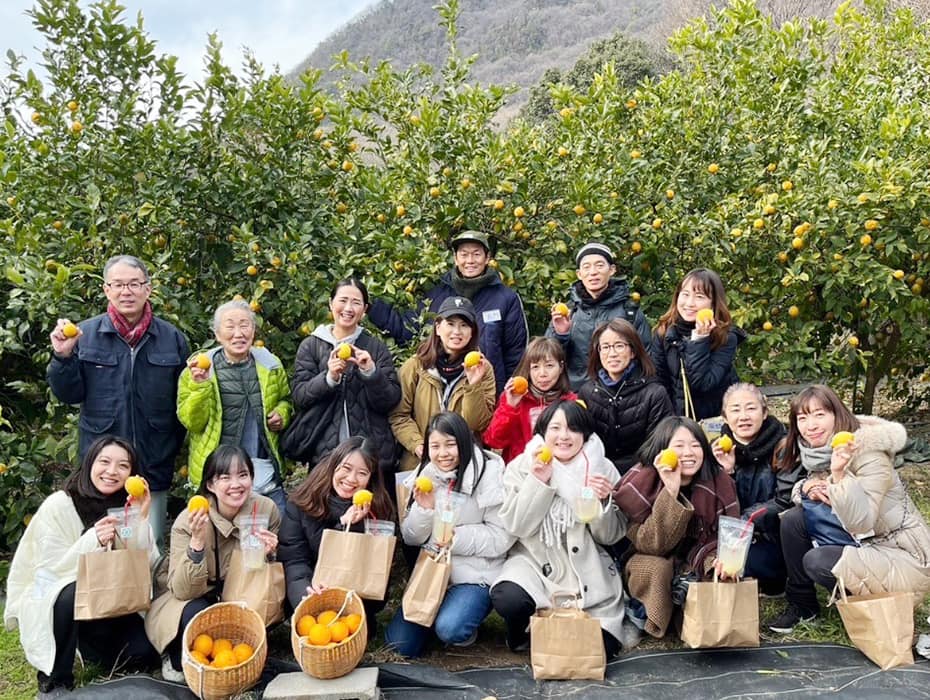
With the desire to share the delicious flavor of freshly harvested Hiroshima lemons with many people, we organized lemon-picking tours from December 2024 to January 2025 at Fight Mihara Farm in Mihara City, Hiroshima, which collaborates with Hiramoto Shoten.
Many participants expressed their delight, saying, "Freshly picked lemons are wonderfully fragrant and refreshing." As part of the tour, we offered participants a special lunch featuring local ingredients and a lemon-based dessert, as well as the chance to squeeze freshly picked lemons to make their own lemon squash drink. This provided them with an opportunity to discover various ways to enjoy lemons, beyond simply eating them fresh.
(2) Developing and selling lemon-based products
Driven by the desire to introduce Hiroshima lemons to more people, we have launched an initiative to develop and market lemon-based products in partnership with Hiramoto Shoten.
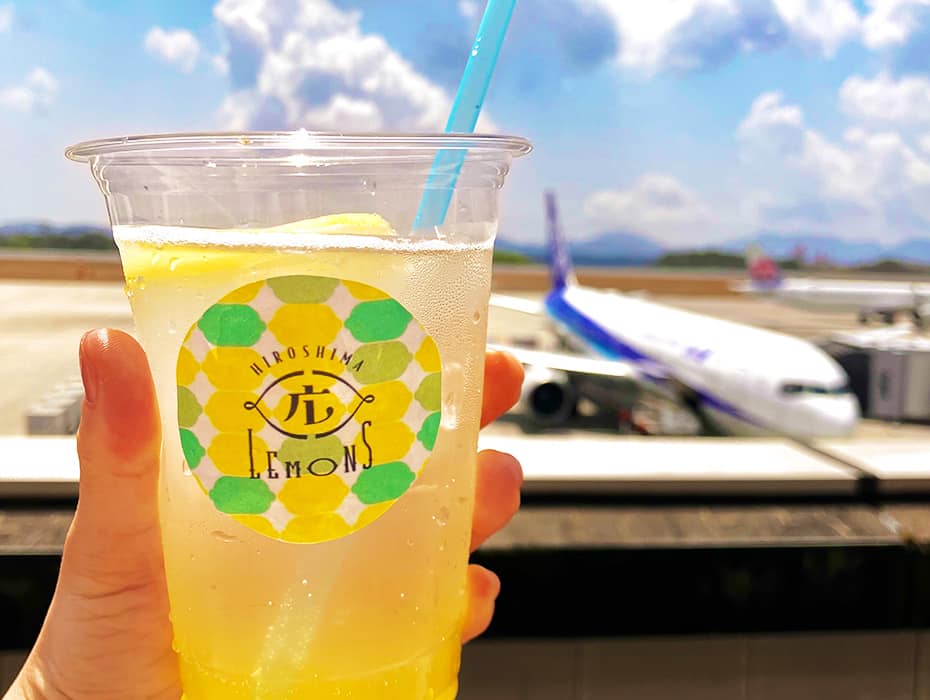
Lemon syrup—enjoy Hiroshima lemons all year round
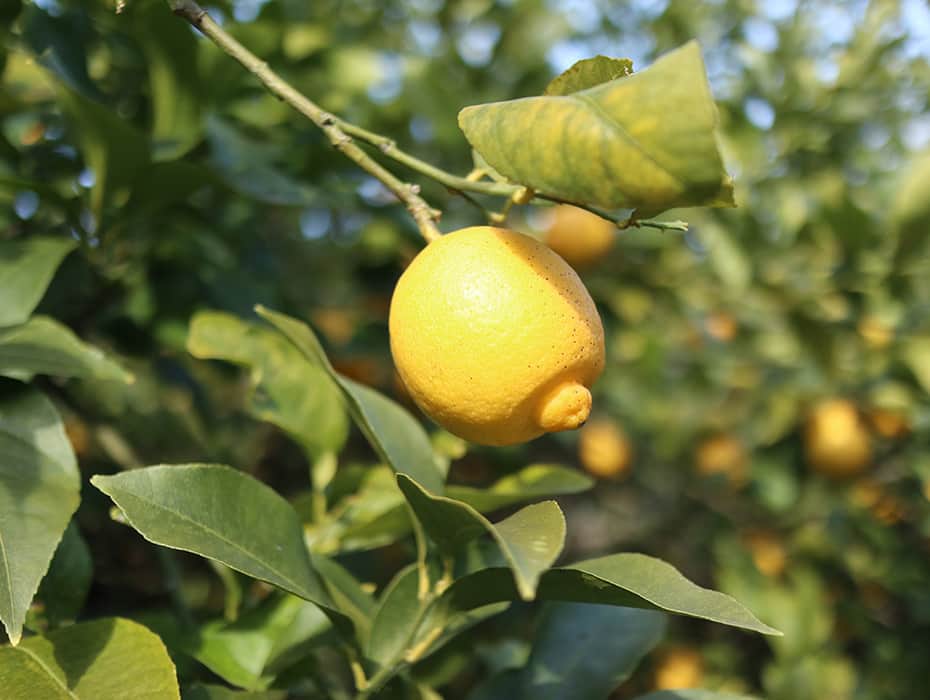
Hiroshima lemons are only in season from December to May. We wanted to be able to share their flavor year-round, so we developed a lemon syrup. Behind this effort was our wish to highlight the safety of Hiroshima lemons, which can safely be used whole, including the peel.
Furthermore, we hoped to offer drinks made with this lemon syrup at the gateway for travelers that is Hiroshima Airport. Thanks to a valuable introduction, we arranged for them to be served at the Airport Plaza Cafe. Through repeated trial and error in developing menus and preparing staff manuals in cooperation with our partner Hiramoto Shoten, we finally succeeded in bringing the product to customers.
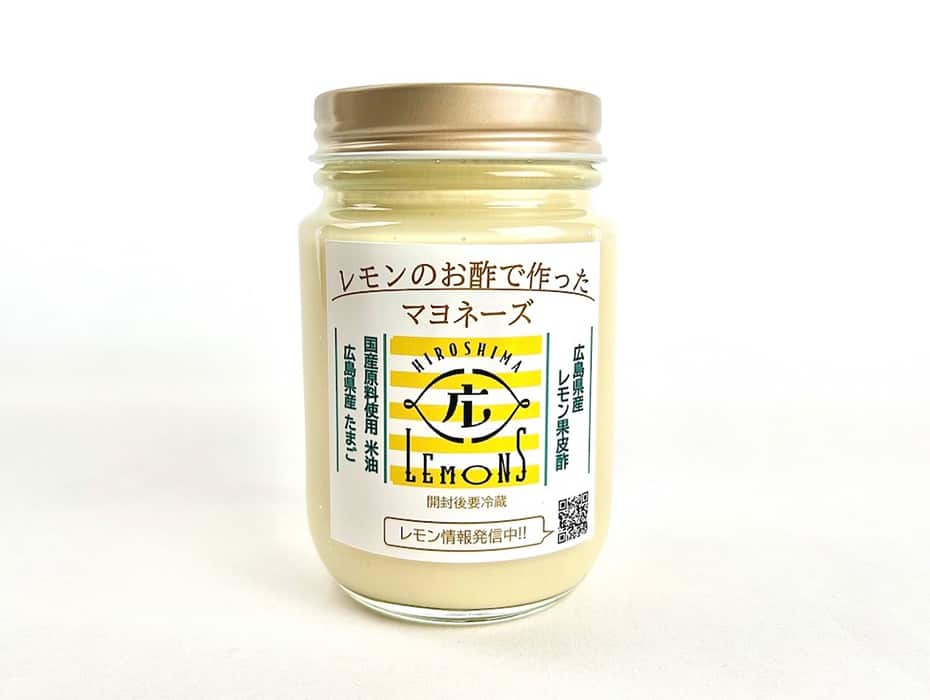
Mayonnaise made with lemon vinegar—presenting the new appeal of Hiroshima lemons
As the second in our series of lemon-based products, we developed a mayonnaise made with lemon vinegar. The project took nearly two years from its launch to completion. We first envisioned a mayonnaise using lemon peel and juice, but in pursuit of a better product, we repeatedly reviewed and refined the idea. As a result, the concept evolved into a mayonnaise featuring lemon peel vinegar, which is made from lemon peel and juice fermented with traditional acetic acid bacteria.
Made with eggs from Sera Town, the mayonnaise has a distinctive taste that combines refreshing acidity with rich flavor, and has received praise from many customers.
Launched on August 1, 2025, it is now available in an increasing number of shops.
Interview with the project lead
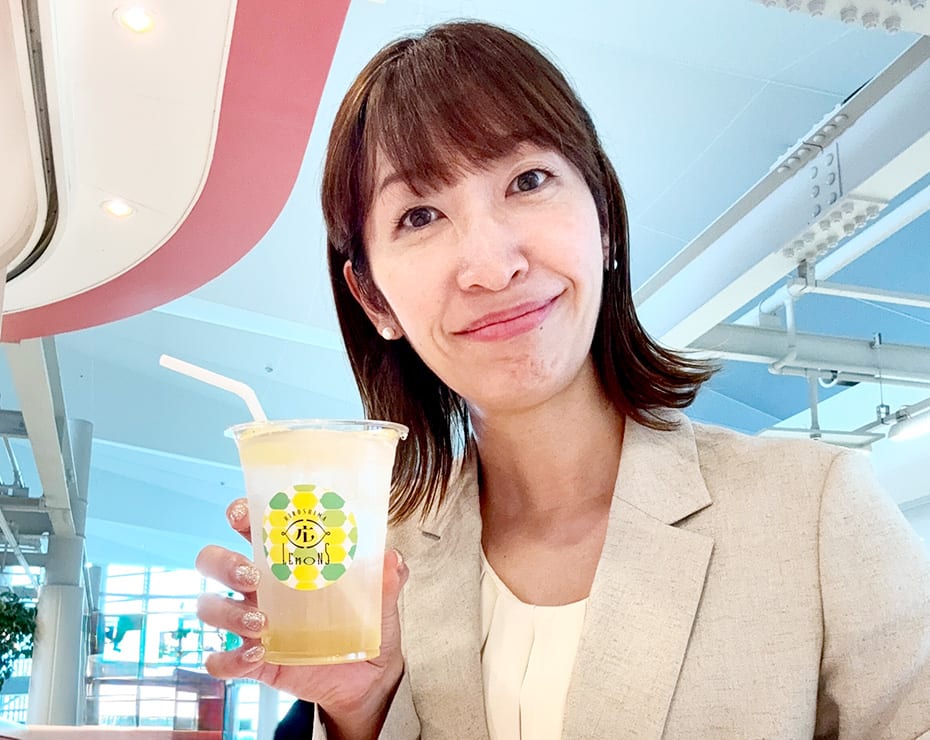
We spoke with Ms. Hikino from the ANA Akindo Hiroshima Branch. She is in charge of the mayonnaise development project, and was happy to talk about her dedication to it.
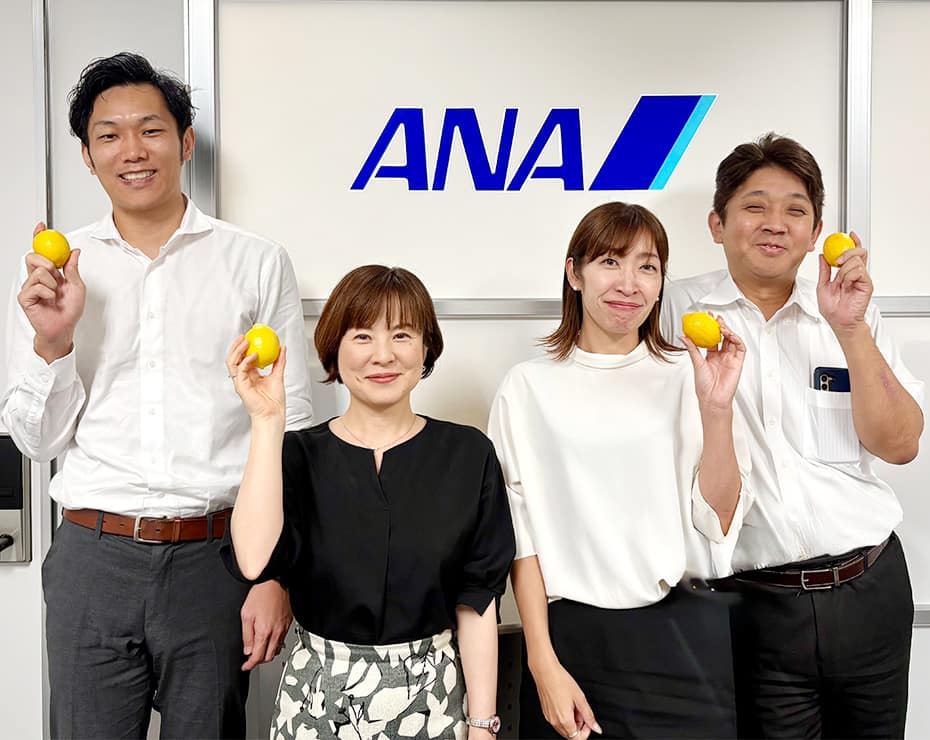
From left: Mr. Kasuga, Ms. Ikeda, Ms. Hikino, and Mr. Kitayama
What were the most rewarding or happiest moments you had when working on the project?
The most rewarding moment came when the product finally took shape after so much trial and error. Although we faced challenges during development, such as finding a manufacturer and repeatedly creating prototypes, we were all the more overjoyed when we finally held the finished product in our hands. In addition, receiving customer feedback like, "It's delicious!" truly gave us a sense of accomplishment and made us feel that our passion had reached them. Mayonnaise made with Hiroshima lemon peel vinegar is rare, and we hope it will become a popular souvenir for those visiting the prefecture.
What was the major challenge in planning and carrying out the project?
We handcrafted each promotional item, including posters, flyers, and labels, while carefully considering how to convey the product's appeal. Through numerous discussions with Hiramoto Shoten, we repeatedly refined the designs and messaging, pooled our ideas, and brought them to life despite limited resources. Looking back, it was a truly valuable experience that far outweighed the hardships.
What was your take on the lemon-picking tours?
While Hiroshima lemons account for about 50% of Japan's domestic lemon production, imported lemons make up roughly 80% of the overall market. That's why I wanted to showcase the fresh and distinctive flavor of domestically grown lemons through these tours and help increase their consumption. I was especially delighted that about half of the participants came from outside Hiroshima Prefecture. Some families visited Hiroshima specifically for the lemon-picking tour and went on to travel around the prefecture, and I was very pleased that we could give them the opportunity to discover more of what Hiroshima has to offer.
What kind of experiences did you have through the collaboration with the local community?
Some people from food companies and restaurants asked in surprise, "Why is ANA engaged in this type of business?" At the same time, everyone kindly and patiently shared their know-how and expertise. We gained valuable insights into how to advance product development and what to consider when leveraging the region's unique characteristics. As a way to repay the support we received, we would like to give back by helping revitalize the local community.
Going forward, what challenges would you like to take on?
We aim to further expand our product lineup to share the appeal of Hiroshima lemons with more people. While the lemon syrup is currently offered mainly at restaurants within Hiroshima Prefecture, we will strive to broaden our sales channels nationwide to allow more customers to enjoy our product. As for the mayonnaise, we plan to develop a commercial version for restaurant use, going beyond household consumption and expanding its market reach. Furthermore, we hope to attract more visitors to Hiroshima through our lemon-picking tours and create a system that sustains their interest and connection with Hiroshima even after their visit. We would be delighted if our initiatives inspire more people to take an interest in Hiroshima's lemon farmers. Ultimately, we would like to share the distinctive flavor of Hiroshima lemons and the value of their safety, which allows them to be eaten whole, including the peel, both across Japan and overseas.
Through the ANA Farm Project, we hope to continue activities that help revitalize the regional economy and promote tourism, while creating opportunities for even more people to visit Hiroshima and experience the region's unique charm.
ANA will continue to carry out projects that help create a better future in cooperation with local communities.
For more information about the ANA Farm Project, please visit this URL (Japanese only).