Initiatives in all Non-Aircraft Flight Operations
ANA Group's Initiatives to Reduce CO2 Emissions
Reduction of Energy
The ANA Group has established energy management standards at each business site and deployed a cloud-based system to build a centralized tracking and management framework for greenhouse gas (GHG) emissions.
As a result of continuous initiatives to rationalize energy use across the Group, ANA Foods Co., Ltd. and ANA Catering Service Co., Ltd.—both designated as "Specified Business Operators" under the Act on the Rationalizing Energy Use—were recognized as "S Class" (Excellent Energy-Saving Operators) in the Ministry of Economy, Trade and Industry's (METI) Business Operator Class Evaluation System (submitted in FY2025, based on FY2024 results).
Toward achieving its medium- to long-term target of a 33% reduction in GHG emissions by FY2030 compared to FY2019 levels, the Group has prioritized high-energy-consumption facilities for LED lighting retrofits. Furthermore, it is sequentially transitioning facilities to electricity backed by Non-Fossil Certificates (NFCs), primarily utilizing renewable-designated NFCs at the converted sites. The Group will continue to enhance energy efficiency and advance concrete initiatives to reach its targets.
Utilization of Renewable Energy
The ANA Group is actively deploying solar photovoltaic (PV) systems across its facilities to address climate change and reduce its environmental footprint.
Key locations—including the Group’s comprehensive training center "ANA Blue Base," the ANA Tonomachi Business Center, and the ANA Telemart Nagasaki Branch (Comprehensive Contact Center)—have installed on-site solar PV systems to utilize self-generated electricity. Furthermore, the Group is expanding the use of self-generated power group-wide by deploying solar PV systems at facilities in other regions.
Energy Conservation in Ground Operations
The ANA Group aims to achieve net-zero CO2 emissions from non-flight operations (ground operations) by FY2050, and is actively working to reduce energy consumption across its owned and leased facilities.
At the comprehensive training center "ANA Blue Base (ABB)," the Group drives facility-wide energy-saving initiatives through the visualization of energy consumption and continuous information sharing with all occupants. In addition to facility energy management, the Group consistently implements initiatives to reduce fuel consumption in its ground vehicles.
Resource Recycling 3R Activities
As its fundamental approach to resource circulation, the ANA Group promotes "3R + R," which integrates "Renewables" (transitioning to renewable materials) into the traditional "3R" framework (Reduce, Reuse, Recycle). Focusing primarily on materials such as plastics and paper, the Group not only advances waste reduction but also implements measures for responsible resource management through recycling and upcycling to maximize material efficiency.
Reducing the use of plastic
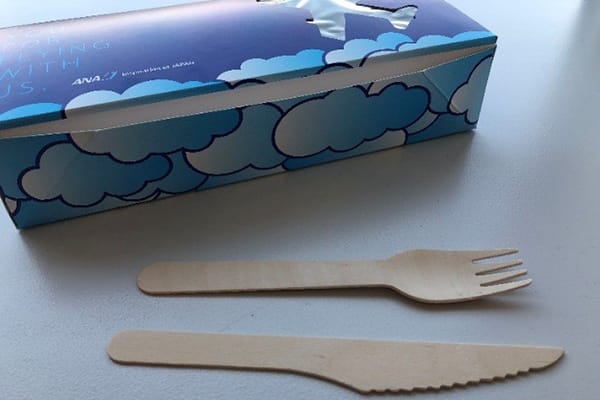
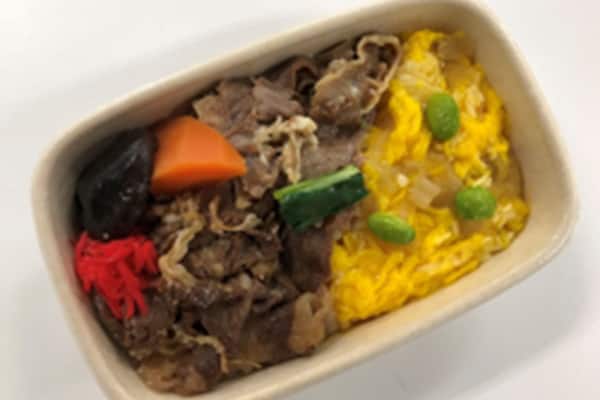
The ANA Group is promoting the transition to environmentally friendly materials for plastic products used in airport lounges and in-flight services. Specific initiatives include replacing international in-flight main dish containers with plant-based materials, as well as switching straws to paper, and cutlery and drink stirrers to wood. Beyond material substitution, the Group actively advances the 3Rs (Reduce, Reuse, Recycle) through measures such as establishing recycling schemes for plastic film used in cargo operations.
The Group has set a medium-term target to reduce targeted waste volume by at least 70% by FY2030 compared to FY2019 levels. Driven by these efforts, the FY2025 result reached a 64.2% reduction against the FY2019 baseline, making steady progress toward our FY2030 goal. The Group will continue its efforts toward responsible resource utilization and the realization of a circular economy.
Related Links:
Establishment of a Resource Circulation Scheme by ANA and Chubu Centrair International Airport
ANA and Central Japan International Airport Co., Ltd. have jointly established an "On-Site Resource Circulation Scheme" to collect used plastic stretch film from air cargo and recycle it into plastic products, such as waste bags, for use within the airport. Through the operation of this scheme, the organizations reduce annual virgin plastic consumption and waste by approximately 20 metric tons while advancing the localized, closed-loop utilization of materials.
Recognized as an exemplary model for regional collaboration, the cascading use of resources, and environmental load reduction, this initiative received the Silver Award at the 2025 Aichi Environmental Awards alongside partner companies.
Related Links:
2025 Aichi Environmental Award
Digitalization of Boarding Procedures and Paperless Operations
The ANA Group is advancing the digitalization of its services and procedures to enhance customer convenience and ensure safe, seamless boarding experiences.
For domestic flights, the Group has completed the transition to fully digital operations, eliminating the printing of "security screening receipts" and "boarding information slips" at security checkpoints and boarding gates across all domestic airports. This information is now accessible directly on passengers' smartphones and devices. Furthermore, the provision of physical magazines and newspapers in-flight and in lounges has been replaced with a digital media service, allowing passengers to access content on their personal devices.
Through this comprehensive digitalization of the passenger journey, the Group is simultaneously elevating the customer experience (CX) and achieving significant paperless operations, directly contributing to a reduction in paper resource consumption.
Joint Development of the World's First New Material "Appurun"
The brainchild of a flight attendant!
Upcycling the in-flight magazine “TSUBASA -GLOBAL WINGS” as a raw material
ANA and BECS have jointly developed “Appurun,” an upcycled paper material that can be molded as flexibly as plastic, from the in-flight magazine "Tsubasa no Okoku. The raw material for “Appurun” is ANA's in-flight magazine “TSUBASA -GLOBAL WINGS,” which is published monthly and has traveled all over the world. The finished product has a smooth, plastic-like texture to the touch, making it the world's first material of its kind.
After use, the material is highly recyclable as it adapts to the existing recycling flow of recovered paper collection, and has great potential to reduce the amount of paper waste as well as the use of plastic as an alternative material to disposable plastic products!
Details
Reduce
Reuse
| Cabin |
|
|---|---|
| Airport Facilities |
|
| Company Facilities |
|
Recycle
| Cabin |
|
|---|---|
| Cargo |
|
| Airport Facilities |
|
Renewable
| Cabin |
|
|---|---|
| Cargo | |
| Airport Facilities |
Reduction of Food Loss and Waste
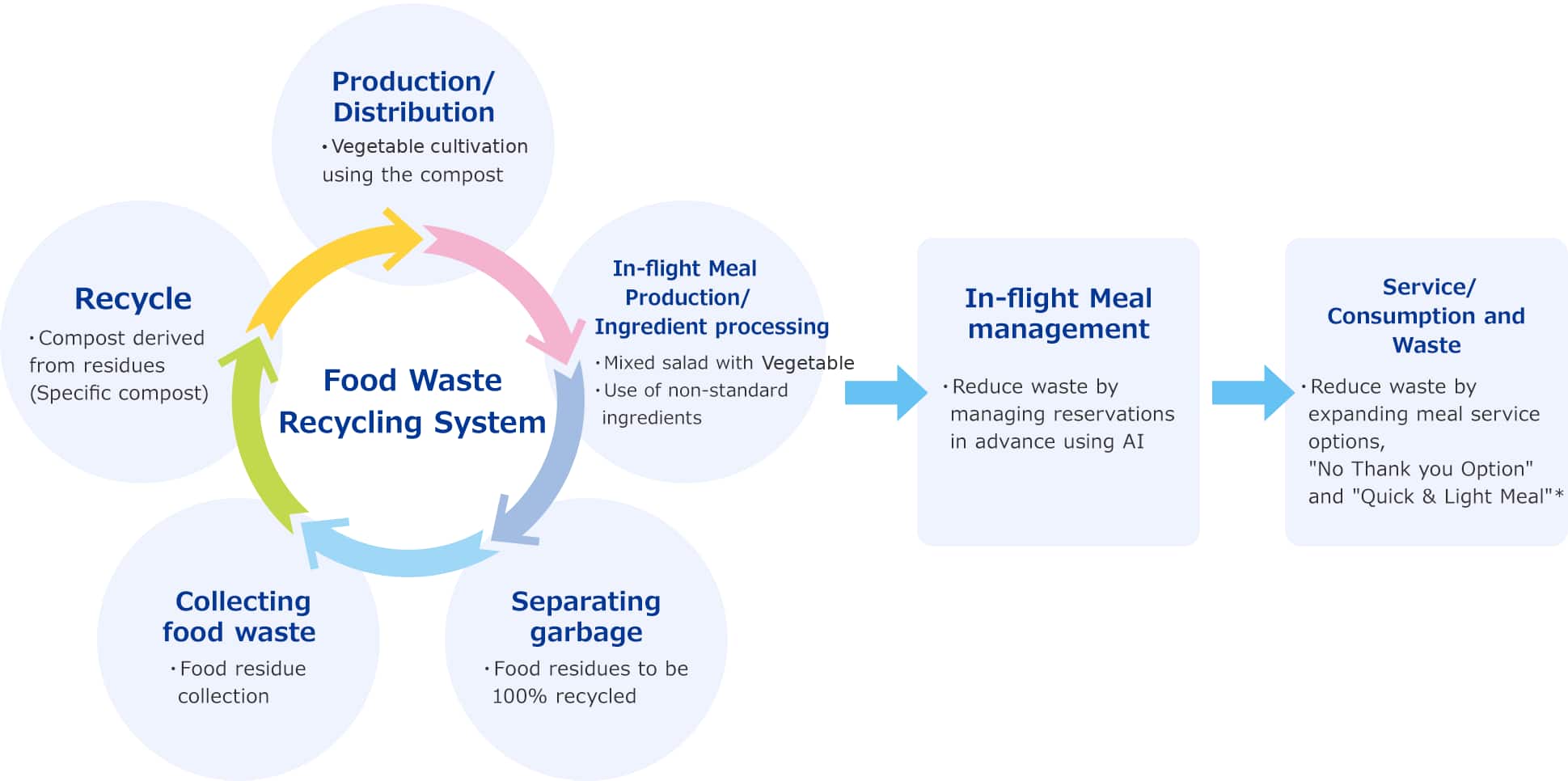
ANA Catering Service a food manufacturing company within the ANA Group, and ANA Foods a food sales company, are working to improve the recycling rate of ingredients generated during processing steps in compliance with the Food Recycling Act.
Concurrently, to reduce food waste generated on board, the Group monitors waste rates in domestic Premium Class as well as international First Class and Business Class to review and optimize in-flight meal loading volumes. In international First and Business Classes, the Group has introduced an AI-driven in-flight meal pre-order service. This initiative ensures the availability of requested meals on board while eliminating surplus meal loading, thereby reducing food waste.
Food Waste Recycling and Closed-Loop Resource Circularity
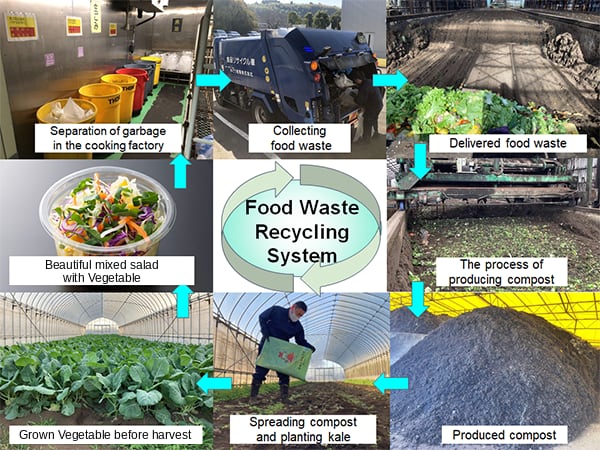
The ANA Group is actively driving resource circularity by repurposing food waste generated during in-flight meal preparation. At facilities operated by ANA Catering Service Co., Ltd., 100% of organic food residue from cooking processes is recovered and converted into compost and animal feed through specialized recycling partners.
Under this circular framework, "Vegetable" cultivated using compost derived from the Narita plant's food residue was served in salads on select international Economy Class flights starting in March 2022. The Group has since expanded the use of this nutrient-rich compost to cultivate a wider variety of vegetables.
In December 2022, this closed-loop initiative was officially certified by Japan's Ministry of Agriculture, Forestry and Fisheries (MAFF) and the Ministry of the Environment (MOE) as a "Recycling Loop Plan" under the Food Waste Recycling Act. This marks the first time an airline-affiliated catering company in Japan has received this governmental certification.
Reduction of Food Waste Across the In-Flight Meal Supply Chain
ANA Catering Service Co., Ltd., which oversees in-flight meal preparation for the ANA Group, has established a centralized framework to monitor and manage food waste generation across every phase of its supply chain—from raw material procurement and meal preparation to in-flight service. Through this data-driven approach, the Group actively drives food waste reduction and optimizes the efficient utilization of food resources.