ANA Group Energy Savings
The ANA Group is advancing the transition to low-carbon infrastructure to achieve its target of a 33% reduction in CO2 emissions by FY2030 (compared to the FY2019 level) within non-flight sectors, which include owned facilities and ground vehicles.
Specifically, the Group executes the optimization of its assets and operations to reduce emissions associated with business activities, centering on three core pillars: "improving energy efficiency" across the organization based on data, "introducing renewable energy electricity" through expanded external procurement and on-site power generation, and "decarbonizing ground vehicles" utilizing electrification and next-generation alternative fuels.
Low-Carbon Infrastructure and Optimized Operations: ANA Blue Base (ABB)
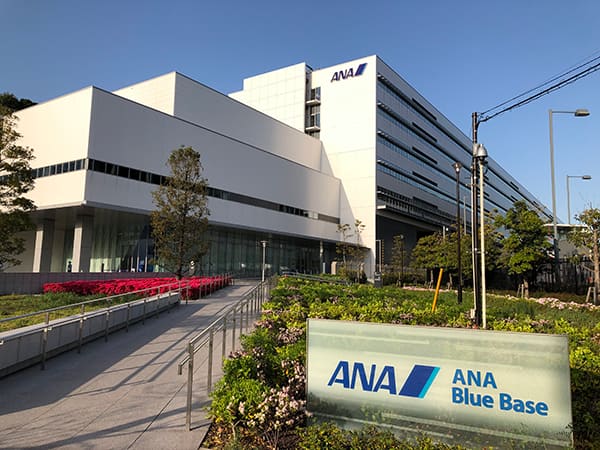
The comprehensive training facility "ANA Blue Base (ABB)" is positioned as a model case for the Group's environmentally conscious facilities, implementing comprehensive energy-saving designs and energy management with high environmental performance.
- Introduction of Building Energy Management System (BEMS): The facility has implemented facility-wide LED lighting and a cloud-based BEMS integrated with motion and imaging sensors, optimizing energy consumption from an equipment perspective.
- Operational Optimization and Promotion of User Behavioral Shifts: By integrating the optimization of HVAC and elevator operations based on actual utilization (such as the "3 UP 3 DOWN" initiative) and strict light-off practices into daily workflows, the Group minimizes energy consumption independently of equipment specifications.
- On-Site Power Generation and External Procurement: The facility utilizes rooftop solar panels to generate and consume clean energy on-site. For electricity demand exceeding on-site capacity, the Group combines this with introducing renewable energy electricity via external procurement, systematically reducing CO2 emissions from electricity use across the entire facility.
Main Initiatives
| Efforts | Contents of implementation | |
|---|---|---|
| 1 | Enlightenments through the signage in the building on the website |
|
| 2 | Further exploration and development of energy conservation measures |
|
| 3 | Original policy deployment |
|
| 4 | Posted on the company website about amounts of usage for electricity and solar energy |
|
| 5 | Transmit information regarding the SDG's on the company website |
|
| 6 | Organizing opportunity-building events (Events organized within the Group). |
|
Extending Vehicle Lifecycles and Promoting Electrification of Airport Ground Vehicles
The ANA Group is implementing a sustainable operational model for its airport ground vehicles nationwide, balancing greenhouse gas (GHG) emission reductions with the extended utilization of existing assets.
By modifying retiring diesel vehicles into electric vehicles (EVs), the Group reduces CO2 emissions by approximately 2.1 tons per vehicle annually while extending each vehicle's lifecycle by roughly 15 years, simultaneously minimizing resource waste and advancing decarbonization. Building on this operational framework, the Group will continue to advance the electrification of its ground vehicle fleet across airport locations nationwide.
Click here for details