Biodiversity
Basic Approach
The ANA Group has established the "ANA Group Environmental Policy" and "ANA Group Biodiversity Policy" and considers the achievement of environmental targets and biodiversity conservation as material issues in resolving environmental concerns. In March 2018, as the first Japanese airline to sign the "Buckingham Palace Declaration" aimed at eradicating illegal wildlife trade recommended by IATA, the Group has been strengthening border measures in our transportation business, such as preventing the transportation of invasive species and providing transportation with consideration for the protection of endangered species. We are actively promoting initiatives to protect biodiversity by strengthening border measures within our transportation business.
The Kunming-Montreal Global Biodiversity Framework (GBF*), which includes four goals and 23 targets to be achieved by 2030, was adopted in December 2022. The ANA Group will specifically address the following targets.
- Global Biodiversity Framework
- Target 3: Ensure and enable that by 2030 at least 30 % of terrestrial, inland water, and coastal and marine areas, are effectively conserved and managed
- Target 5: Ensure that the use, harvesting and trade of wild species are sustainable, safe and legal
- Target 6: Countermeasures against invasive alien species
- Target 8: Minimize the impact of climate change on biodiversity through mitigation, adaptation, and disaster risk reduction actions
- Target 16: Halve global food waste, significantly reduce overconsumption and substantially reduce waste generation
ANA Group Biodiversity Policy
The ANA Group considers the achievement of environmental targets to solve environmental issues and the conservation of biodiversity as important management issues.
In July 2023, the ANA Group established the ANA Group Biodiversity Policy, which the Board approved by the Directors.
This policy applies to all value chains involved in the ANA Group's business activities.Based on this policy, the ANA Group is committed to avoiding or minimizing negative impacts on the natural environment and human rights through not only its business activities, but also through collaboration with suppliers and lobbying to related organizations, to conserve and restore the natural environment 'Nature Positive', and to provide sustainable services to our customers.
- The ANA Group will evaluate the impact and dependence of its business activities on biodiversity, taking into account the unique characteristics of each region, and disclose this information to society. We will also proactively communicate our Nature Positive initiatives and continuously strive to improve our efforts.
- We will comply with the United for Wildlife Transport Taskforce Buckingham Palace Declaration, which aims to eradicate the illegal wildlife trade. We will also work diligently to prevent the illegal trade of wildlife through air transport and ensure that air transport does not serve as pathways for invasive species that threaten ecosystems, habitats, and species. We will ensure that endangered species listed in the Convention on International Trade in Endangered Species of Wild Fauna and Flora (CITES) are not utilized in flight-related services, raw materials, or in-flight service items.
- We are committed to achieve No Deforestation within our supply chain, we will refrain from sourcing goods from suppliers that cause biodiversity loss or deforestation.
- We will promote measures to minimize negative impacts on biodiversity by reducing our environmental footprint and mitigating climate change.
- Our measures also include the preservation of ecosystems and the prevention of deforestation by minimizing food waste and paper consumption.
- We will raise awareness of biodiversity conservation and encourage employee participation in biodiversity conservation activities through education to all our officers and employees.
- In addition to group companies collaborating with business partners and suppliers to conserve biodiversity in the course of their business activities, we will actively promote initiatives in partnership with external stakeholders such as governments, local communities, and international NGOs and NPOs.
- The Policy has been approved by the Board of Directors in July 2023.
This policy applies to all value chains involved in the ANA Group's business activities.
Disclosures Based on TNFD Recommendations
General Requirements
1. Adaptation to Materiality
The ANA Group analyzes and evaluates the interdependence and impact of its business activities on nature, and how this relates to risks and opportunities for the company, based on the TNFD's natural impact assessment and the concept of double materiality. This assessment is conducted from the perspective of both “the impact on corporate performance and finances” and “the impact on society and the environment.”
2. Scope of Disclosure
The scope of disclosure was determined primarily based on the availability of information necessary for analysis, focusing on direct operations and upstream value chains.
3. Locations Where Nature-Related Issues Exist
The following locations were analyzed in this assessment.Translated with DeepL.com (free version)
| Nature-related issues | Region | Area |
|---|---|---|
| Airport | Japan | All of Japan* |
| Invasive alien species | abroad | Belgium, United States, France, Germany, Austria, Italy, Mexico, China, India, Vietnam |
| Illegal wildlife trade | abroad | Thailand, United States, Hong Kong, China |
| Tourism resources | Japan | All of Japan* |
- There is no concentration of tourism resources in specific regions (such as Hokkaido, Tohoku, or Kyushu), and tourism resources are distributed throughout the country around airports.
4. Integration with other sustainability disclosures
Disclosures related to climate change are made in accordance with the TCFD (Task Force on Climate-related Financial Disclosures) framework, and we will consider integrated disclosures between the TCFD and TNFD in the future.
5. Timeframe Considered
We considered the short term (0-1 year), medium term (2-5 years, medium-term management plan period), and long term (over 5 years, medium-term management plan period and beyond). The impact was considered as of 2025 (with some consideration given to 2050).
6. Participation of Indigenous Peoples, Local Communities, and Related Stakeholders in Identifying and Evaluating the Organization's Nature-Related Issues
The ANA Group positions suppliers as key stakeholders and conducts dialogue and surveys to manage supply chain risks related to nature-related issues, including biodiversity. The Supplier Code of Conduct requires suppliers to respect the rights of indigenous peoples and contribute to local communities. Assessing the impact on relevant stakeholders in the identification and evaluation of nature-related issues is a topic for future consideration.
Governance
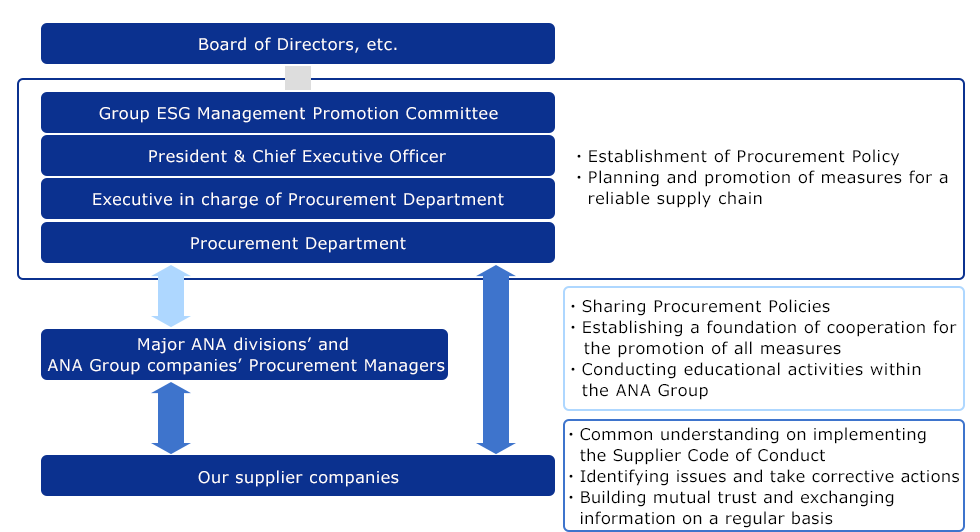
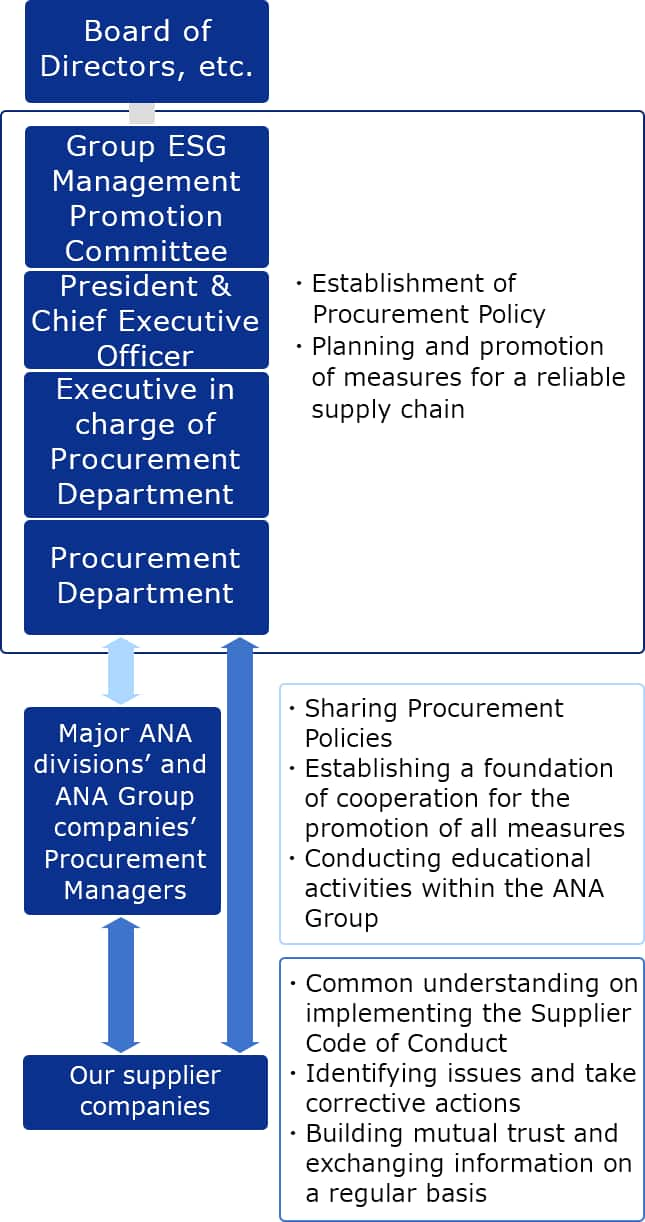
As for nature-related issues including biodiversity-related dependencies, impacts, risks and opportunities, we are dealing with these issues under our ESG management implementation structure. Specifically, we have the ANA Group ESG Management Promotion Committee, which operates under the guidance of the president of ANA HOLDINGS and under the chairmanship of the director in charge of Group Risk and Compliance (Chief ESG Promotion Officer: CEPO). This committee consists of directors and executive officers of ANA HOLDINGS and ANA Group companies and the full-time Audit & Supervisory Board Members of ANA HOLDINGS. The committee discusses and decides on the Group's core policies and measures related to environmental issues, including those concerning climate change and biodiversity, and monitors the progress made with the targets set for these issues on a quarterly basis. The Board of Directors sets the entire Group's management policies and targets while overseeing the management and business execution of each Group company.

We also express our commitment to addressing climate change- and biodiversity-related issues in the ANA Group Procurement Policy.
The ANA Group Procurement Policy is comprised of the Basic Procurement Policy and the Supplier Code of Conduct and was formulated in reference to the United Nations Guiding Principles on Business and Human Rights, the International Bill of Human Rights (the Universal Declaration of Human Rights) and other international norms concerning human rights and labor. We select suppliers based on the Procurement Policy and conduct regular monitoring of them while proactively working to gain their understanding and cooperation with regard to the related issues.
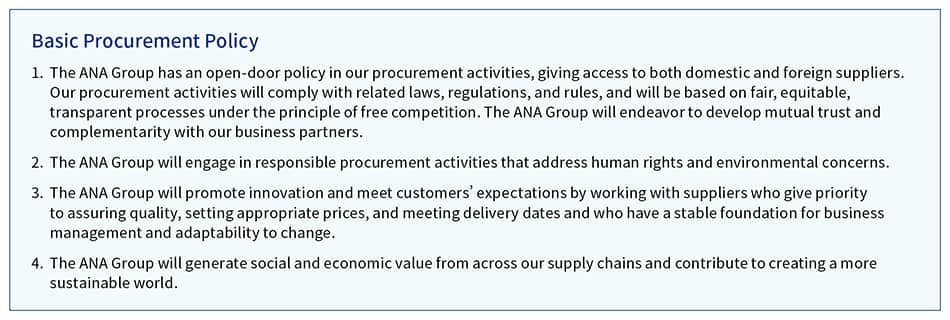
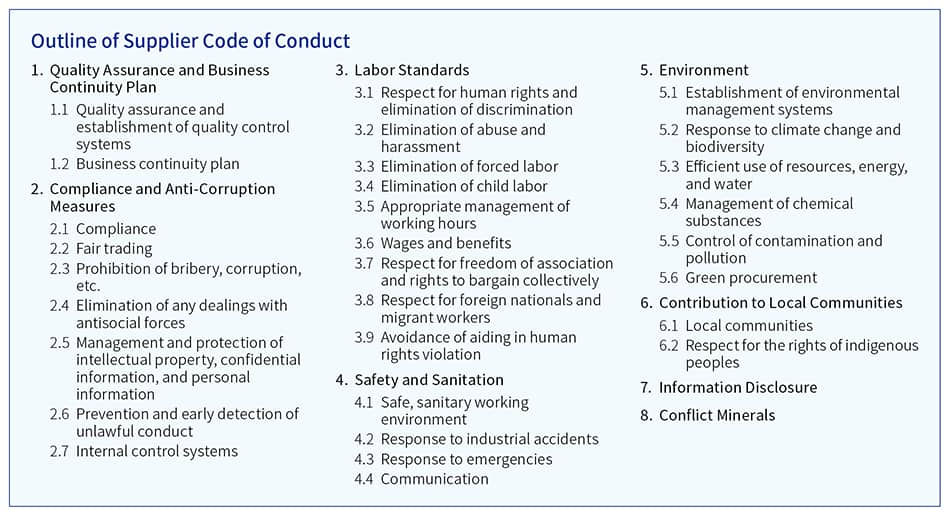
Further, in order to promote measures for responsible procurement, we have appointed procurement managers at the departmental level and are working with our suppliers to achieve a sustainable society.
Strategy
Scope of Analysis
In identifying the ANA Group's dependence on and impact on nature in its business activities, we comprehensively utilized the issues identified by the International Air Transport Association (IATA) and the International Civil Aviation Organization (ICAO), as well as the results of discussions with external experts such as ERE Japan. Based on an initial assessment PDF Opens in a new window.In the case of an external site,it may or may not meet accessibility guidelines. using ENCORE*1, we identified the nature-related impacts and dependencies PDF Opens in a new window.In the case of an external site,it may or may not meet accessibility guidelines. in our direct operations and upstream value chain.
This time, using the LEAP approach*2 recommended by TNFD, we analyzed priority areas among the identified dependencies and impacts for which information was available, and conducted an assessment of the significance of dependencies, impacts, risks, and opportunities.
- *1.ENCORE : A tool that helps to investigate exposure to nature-related risks and understand dependencies on and impacts on nature.
- *2.LEAP approach : An integrated approach for evaluating and analyzing nature-related issues.
Identification of priority areas
Concept for Priority Area

When it comes to nature-related issues, it is generally very important to consider differences in circumstances and characteristics depending on the location. The TNFD also recommends disclosing information on “priority areas” defined as locations that meet either of the criteria of “areas of concern” or “material areas.”
Areas of concern... Regions where an organization's direct operations, or assets or activities in the upstream and downstream value chain, if possible, come into contact with nature in regions considered ecologically sensitive.
Material regions... Regions where an organization has identified significant nature-related dependencies, impacts, risks, and opportunities.
Analysis
Based on the TNFD's approach to priority areas, we conducted four types of analyses.
In the analyses, we took into account the “content of nature-related dependencies and impacts that the ANA Group may be involved in through its business activities” examined in the previous fiscal year, as well as the availability of information related to them, and conducted analyses from the perspective of “areas of concern” for airports (1), invasive alien species (2), illegal wildlife trade (3), and tourism resources (4) from the perspective of “material areas.”
(1) Airports in Japan
The ANA Group surveyed indicators related to four categories of areas of concern identified by the TNFD (importance of biodiversity, integrity of ecosystems, physical water risks, and importance of ecosystem services) in the vicinity of airports in Japan that it serves. The results showed that endangered species and protected areas were found at almost all airports. In particular, it was found that many endangered species, including endemic species, inhabit the vicinity of airports on islands.
Reference*1: Key Biodiversity Area, number of endangered species, protected area data, etc.
Priority areas: Island airports.

(2) Invasion of alien species
We evaluated the risk of international air transport becoming a route for the invasion of alien species. Based on the number of international flights (assuming that the more flights there are, the higher the possibility of transporting and introducing invasive alien species), the number of alien species at the departure point (the number of invasive alien species living in the departure country as native or alien species), and climate similarity (assuming that the more similar the climates of the two airports are, the higher the possibility of transported and introduced organisms becoming established, and using the climate similarity index between the two locations: Climatch) between the two locations), the results suggested that the risk of organisms being introduced into Japan from overseas is higher. In particular, routes from countries with a high number of invasive alien species, such as Belgium and the United States, were found to be particularly high-risk.
Reference*2: Number of international flights, number of invasive alien species at departure locations, and climate similarity.
Priority regions: Source countries: Belgium, the United States, France, Germany, Austria, Italy, Mexico, China, India, Vietnam; Destination airports: Narita, Haneda, Kansai

(3) Illegal trade in wildlife
We analyzed the risk of unintentionally engaging in illegal trade by comparing the number of international flights with the number of CITES ”Convention on International Trade in Endangered Species of Wild Fauna and Flora”-related items seized by Japanese customs. The results showed that routes originating in Thailand, the United States, Hong Kong, and China were particularly high-risk.
Reference*3:
Number of international flights and number of seizures by customs at airports in Japan
Priority regions: Thailand, the United States, Hong Kong, and China

(4) Tourism Resources
We defined tourism resources within 100 km of airports as tourist destinations used by airport users, and evaluated their dependence on and impact on domestic nature-related tourism resources. In terms of dependence, we analyzed the number of tourist destinations around airports and regions where future population decline will lead to a shortage of workers. As a result, we found no concentration of tourism resources by region, and tourism resources were distributed throughout the country around airports. In terms of impact, we referred to the Japan Tourism Agency's “pioneer model areas” related to overtourism and analyzed Nara, Mount Fuji, Aso, and other areas where overtourism is a concern as material regions.
Reference*4:
Nature-related tourism resources, tourism appeal index, Japan Tourism Agency announcement “Project to Promote Sustainable Tourism by Preventing and Suppressing Overtourism,” etc.
Priority regions:
(Dependency) Entire Japan (No concentration of tourism resources was observed in regions such as Hokkaido, Tohoku, and Kyushu, and tourism resources were widely distributed around airports nationwide)
(Impact) Regions where overtourism has become evident
(Opportunity) Routes with many tourist destinations but few flights, which could serve as dispersal destinations for overtourism

*1*2*3*4 Reference data sources
Click here for details.PDF Opens in a new window.In the case of an external site,it may or may not meet accessibility guidelines.
Assessment of the importance of dependencies, influences, risks, and opportunities
Methods of assessing importance
Based on the concept of double materiality*, the ANA Group has identified key nature-related sustainability issues. We have worked to systematically understand our relationship with nature by clarifying the series of “pathways” through which our business “depends” on nature, “impacts” nature, and how these lead to ‘risks’ and “opportunities.” Dependency was assessed based on the financial impact and likelihood of occurrence on the ANA Group in the event of ecosystem service loss, while impact was evaluated based on the severity and likelihood of changes caused by the business. We considered the time frame in which these nature-related dependencies and impacts could affect the ANA Group's management and finances (short term (0-1 year), medium term (2-5 years/medium-term management plan period), and long term (over 5 years/medium-term management plan period)), and identified important risks and opportunities by evaluating the magnitude of financial impact and the likelihood of occurrence, while dividing them into physical risks and transition risks.
- Double materiality:
An approach to sustainability that considers not only the impact on a company's performance and finances (single materiality) but also the impact a company has on society and the environment.


Results of the importance assessment
ANA Group's business activities have been assessed as having an impact on the invasion of alien species, illegal wildlife trade, sustainable tourism, overtourism, and regional revitalization. At present, we assess that these impacts are unlikely to immediately lead to transition risks such as legal regulations, but we recognize the need to review them regularly in the future as regulations and customer preferences may change.
Regarding the natural tourism resources in the regions we depend on, we have assessed that the shortage of workers due to future population decline could lead to reduced revenue, constituting an important “physical risk.”
Based on the results of this assessment, we have added GBF Target 6: Invasive Alien Species Countermeasures to our “Basic Approach.”
ANA Group also sees business opportunities in addressing these issues. We believe it is important to balance nature restoration and demand creation by increasing sustainable tourism, and to balance the mitigation of overtourism and revenue improvement by dispersing demand to routes that are concentrated in nature-related tourist destinations but are not crowded.


Countermeasure
We will consider strengthening effective countermeasures for the important nature-related items identified this time, utilizing the AR3T framework* and other tools.
- A framework for action aligned with the goals that companies should pursue, as proposed by SBTs for Nature.
Risk and impact management
- Evaluation process for nature-related issues
In order to identify nature-related issues, we first discussed with related companies and departments within the group, comprehensively utilizing the results of analyses conducted using various tools recommended by the TNFD, as well as the issue recognition of the IATA (International Air Transportation Association) and ICAO (International Civil Aviation Organization), and dialogues with external experts, to identify dependencies and impacts. risks, and opportunities. The degree of dependence was evaluated based on the financial impact on the ANA Group in the event of ecosystem service loss and the likelihood of such loss occurring, while the degree of impact was evaluated based on the severity of changes caused by the business and the likelihood of such changes occurring, thereby identifying significant risks. - Management Process for Nature-Related Issues
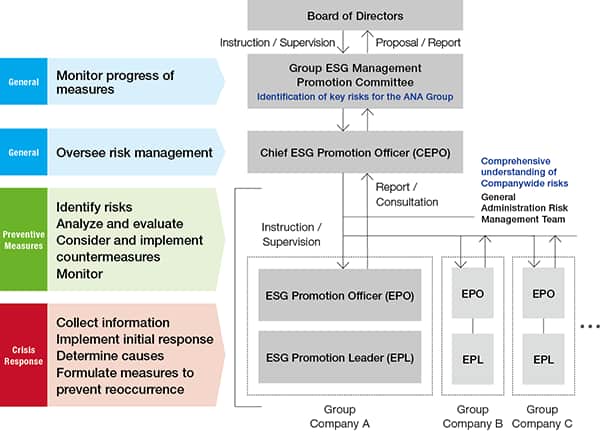
Based on the ANA Group Total Risk Management Regulations, which stipulate the basic principles of risk management within the ANA Group, the Group ESG Management Promotion Committee monitors the progress of measures.
Under the Chief ESG Promotion Officer (CEPO), who is the highest-ranking executive responsible for ESG management promotion (risk management promotion and information security promotion), each group company has established an ESG Promotion Officer (EPO) as the person responsible for ESG management promotion and an ESG Promotion Leader (EPL) as the driving force behind ESG management promotion, thereby establishing a risk management system. Risks related to sustainability, including those related to nature, are also addressed within the total risk management framework.
Metrics and targets
The ANA Group is committed to mitigating the impact that it causes to biodiversity in its business activities and will strive for biodiversity conservation through its business activities and social contribution activities. As for the TNFD core global disclosure metrics to manage nature-related dependencies, impacts, risks and opportunities, we are planning to analyze and disclose them based on their respective importance for the ANA Group. SAF:*Sustainable Aviation Fuel
| ANA Group Environmental Targets | FY2030 | FY2050 | |
|---|---|---|---|
| 1 | Reduce CO2 emissions | Reduce 10% or more compared to FY2019 levels Replace jet fuel to SAF* by 10% or over |
Net zero |
| 2 | Reduce Resource Waste Ratio (Plastics, Paper, etc.) |
70%+ reduction (waste generated vs. FY2019) |
Zero waste ratio |
| 3 | Reduce Food Waste Ratio (Including In-Flight Meals, etc.) |
Reduce to less than 3.8% waste ratio | Less than 2.3% |
| 4 | Illegal Wildlife Trade | One or more seminars | One or more seminars |
- Reduction of CO2 emissions mitigates climate change and protects living organisms from disasters. We will reduce CO2 emissions by replacing at least 10% of consumed fuels with SAF by 2030, and by converting almost all fuels to low carbon by 2050. We will avoid impact on biodiversity by purchasing SAF made from raw materials certified by EU and ICAO CORSIA that have minimum negative effects on biodiversity and food production. We will also utilize high-quality carbon offsets that not only address climate change but also contribute to the conservation and enhancement of biodiversity.
- Reducing the use of paper resources will also help to halt deforestation, protect the forests that produce oxygen, and conserve the ecosystems that inhabit them. As from May 2020, the ANA Group has introduced paper straws made of Forest Stewardship Council (FSC) certified materials. In addition, starting in April 2020, we have replaced plastic cutlery with FSC certified wooden cutlery, which will reduce the use of disposable plastic by approximately 6 tons, based on our actual use in fiscal year 2019.
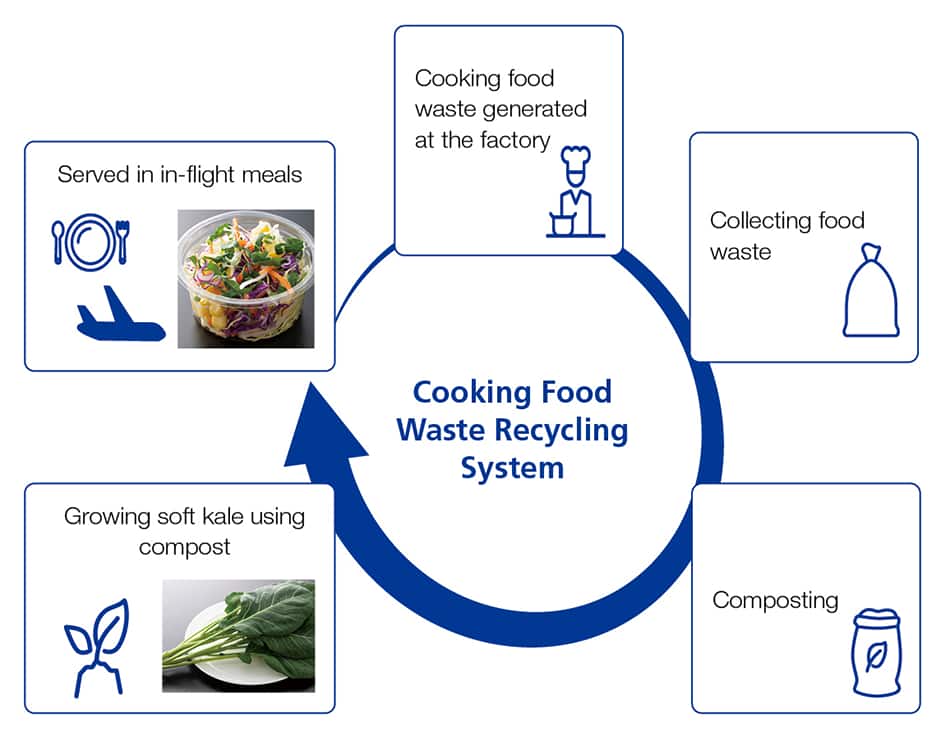
- To reduce food loss from in-flight meals, we will recycle food waste as fertilizer to reduce the overall waste. We will decrease the degradation of biodiversity through No Deforestation and land use by reducing the application of chemical pesticides and fertilizers.
- We will strive to maintain and restore biodiversity through the achievement of our environmental goals and will conduct educational activities aimed at eradicating illegal wildlife trade in air transportation.
The disclosure status of the “Global Core Disclosure Indicators” for managing nature-related dependencies, impacts, risks, and opportunities in TNFD is as follows. We will analyze and disclose other indicators in the future, taking into account their importance to the ANA Group.
| Metric No. | Factors causing changes in nature | Indicators |
|---|---|---|
| Climate change | GHG emissionsPDF Opens in a new window.In the case of an external site,it may or may not meet accessibility guidelines. | |
| C2.1 C2.2 C2.4 |
Pollution and pollution control | Drainage discharge, industrial waste generation and treatment, and the total amount of air pollutants other than greenhouse gases (GHG)PDF Opens in a new window.In the case of an external site,it may or may not meet accessibility guidelines. |
| C4.0 | Invasive alien species, etc. | Measures against unintentional introduction of invasive alien species (IAS) |
Measures implemented through business activities
| Avoid, Reduce | Reduce, Restore & Regenerate | Restore & Regenerate |
|---|---|---|
|
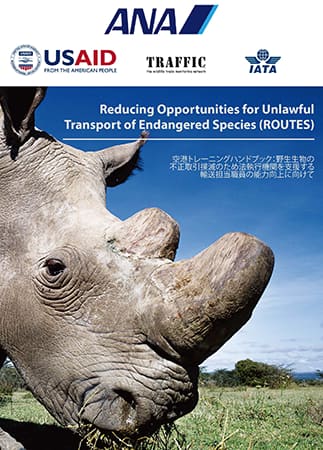
1. Organizing Seminars to Eradicate Wildlife Trafficking
 2. Use of SAF
|
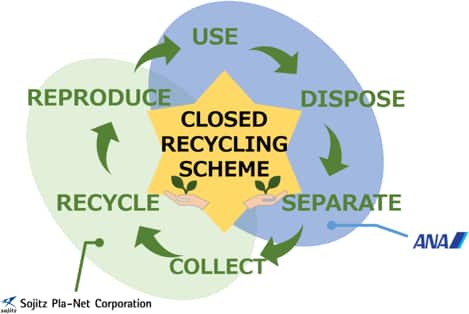
3. ANA Group and Sojitz Pla-Net launch recycling operation to reduce the disposal of plastic waste
 4. Circulating Mechanisms for Food Residues
 |
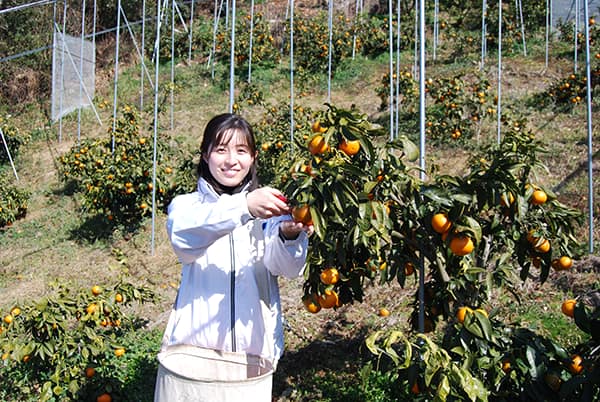
5. Restoration of Mandarin Orange Orchard in Ehime prefecture and Green Tourism promotion
 |
Collaboration with Stakeholders

Participation in the TNFD Forum
Through its participation in the TNFD Forum, the ANA Group is working to deepen its knowledge of the international framework for the disclosure of natural capital-related information and to enhance its information disclosure.
Adoption of disclosures in line with the TNFD recommendations
In December 2023, the ANA Group have signalled intent to adopt the TNFD (Taskforce on Nature-related Financial Disclosures) Recommendations.
We will promote nature-related disclosure in line with the TNFD framework.

Participation in the "30by30" Alliance for Biodiversity launched by the Ministry of the Environment
We support the "30 by 30" targets, which aims to effectively conserve at least 30% of the land and oceans as healthy ecosystems by 2030, now sits as "target 3" of the Kunming-Montreal Global Biodiversity Framework, adopted at COP15.
The "30by30" Alliance for Biodiversity (Japanese only) Opens in a new window.In the case of an external site,it may or may not meet accessibility guidelines.
English Outline of Japan's 30 by 30 Roadmap Opens in a new window.In the case of an external site,it may or may not meet accessibility guidelines.
Endorsement of the Keidanren Declaration of Biodiversity and Action Guidelines
Since 2016, we have participated in the Keidanren Council for Nature Conservation as a standing committee member company and endorse the Keidanren Biodiversity Declaration Initiative.
Keidanren Initiative for Biodiversity Conservation Opens in a new window.In the case of an external site,it may or may not meet accessibility guidelines.
WWF Corporate Member
As a corporate member of WWF Japan since 2022, we support WWF's environmental conservation activities.
WWF JAPAN Opens in a new window.In the case of an external site,it may or may not meet accessibility guidelines.
| Reduce Restore Regenerate |
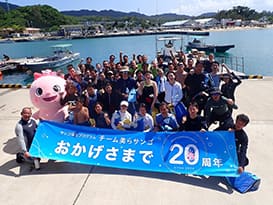 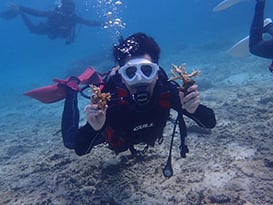 |
Coral conservation in Onna village, Okinawa prefecture (since2004) Under the auspices of the Ministry of the Environment, Okinawa Prefecture, and Onna Village, and with the cooperation of the Onna Village Fisheries Cooperative Association, we have held coral seedling planting programs and educational events in and outside Okinawa Prefecture.The program, which began in 2004, will celebrate its 20th anniversary in 2024, with 16 member companies.We aim to protect coral from the bleaching phenomenon caused by rising sea water temperatures, feeding damage caused by massive outbreaks of crown-of-thorns starfish, and pollution caused by red soil runoff, thereby preserving the marine ecosystem. By 2024, 4,652 people will have participated and planted 19,532 coral plants, protecting the coral from bleaching caused by rising sea temperatures, damage caused by crown-of-thorns starfish, and pollution caused by red soil runoff, with the aim of preserving the marine ecosystem. |
|---|---|---|
| Reduce Restore Regenerate |
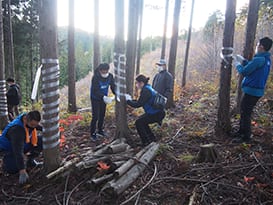 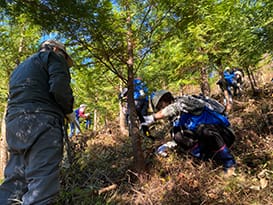 |
ANA Kokoro-no-Mori Project (since 2012) With the aim of supporting the reconstruction of Minamisanriku Town and the preservation of local forests, we not only plant trees, but also work to protect the living organisms that inhabit them and preserve the ecosystem through appropriate thinning and forest road maintenance. Wood from forest thinning is commercialized and sold at a local factory, which also provides employment for those responsible for forest maintenance and product production. In 2020, the company will be presented with an FSC-certified (Forest Stewardship Council®) model aircraft, and it is engaged in activities while deepening exchanges with local residents. |
| Reduce Restore Regenerate |
  |
Invasive species control activities in "Yambaru National Park" (since 2017) In cooperation with the Ministry of the Environment and Kunigami County, employee volunteers conduct emergency measures to control invasive alien species (Tsuruhiyodori and Nagaetsunogeitou) in the Tagari area of Ogimi Village, an area adjacent to "Yanbaru National Park.Through the control work, under the guidance of rangers from the Ministry of the Environment, we aim to conserve native plants and ecosystems that are declining due to the proliferation of non-native species. |