
December 26, 2025
The ANA Group has been holding the ANA Future Promise Forum since FY2023, inviting individuals who are active in various fields and representatives from companies with a vision centered on environmental responsibility as guest speakers. The aim is to encourage each and every employee to view ESG as a personal matter and translate it into action.
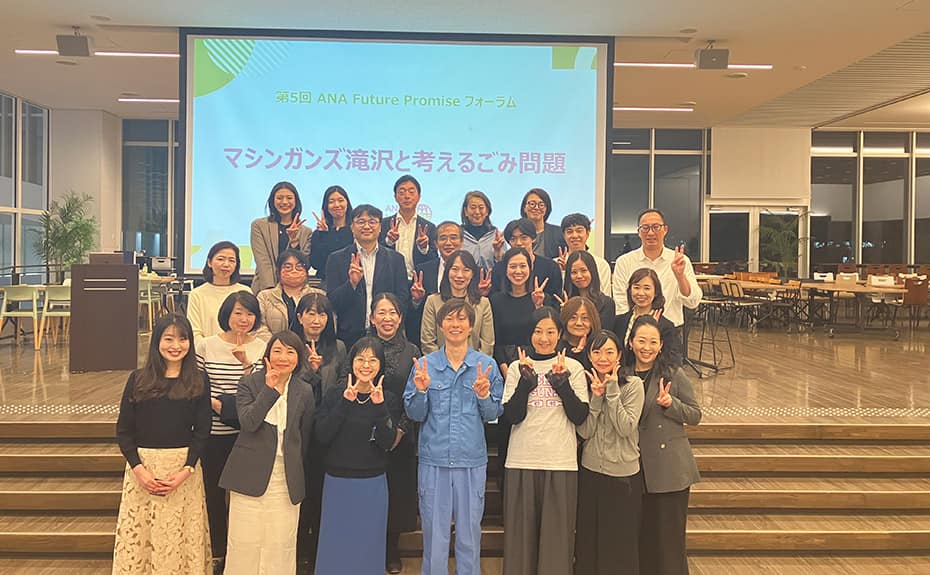
In November 2025, the Group held the fifth forum, with approximately 140 ANA Group employees participating both onsite and online.
Guest Speaker: Shuichi Takizawa
At the fifth forum, we welcomed Mr. Shuichi Takizawa of the comedy duo Machine Guns, affiliated with OHTA PRODUCTION Inc., as the guest speaker.
With a 28-year career as a comedian, Mr. Takizawa has also been working as a garbage collector for 14 years, pursuing the two careers simultaneously.
In addition to his active engagement in the media, he has authored numerous books based on his experience as a garbage collector, while delivering lectures on environmental issues nationwide.
He also hosts the Takizawa Gomi Club, an online community that promotes activities designed to help reduce waste in enjoyable ways.
In this forum, Mr. Takizawa passionately shared his observations about society as revealed through waste and discussed what we can do today for the future, drawing on insights gained through his unique perspective of working as a garbage collector.
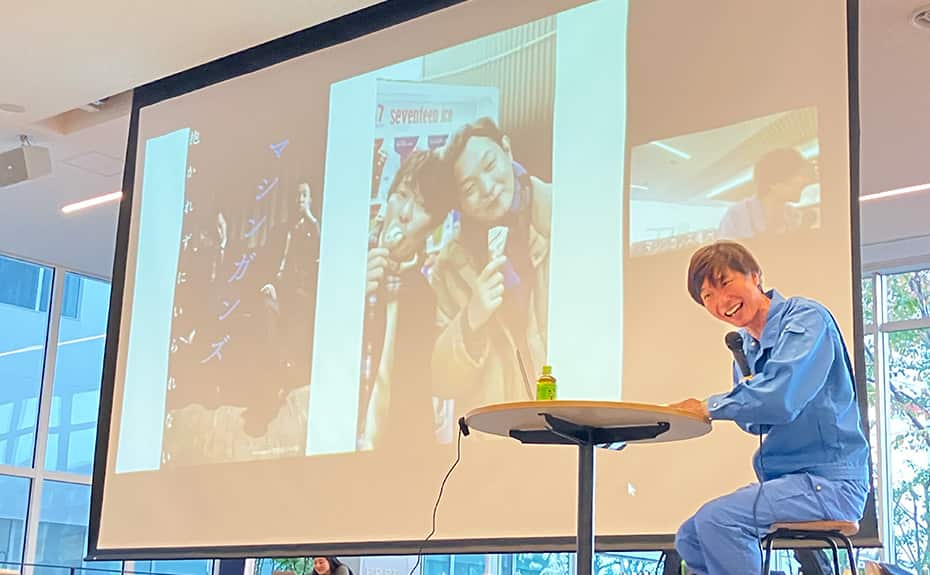
The Serious Waste Problem We Are Facing
Showing several photos of garbage bags disposed of by households, Mr. Takizawa said, "Garbage never lies."
As the contents of garbage reveal individuals' preferences and lifestyles, garbage can be considered a reflection of one's daily life.
The disposal of such waste in large quantities has become a serious problem that threatens Japan's future.
Today, the capacity of final waste disposal sites in Japan is estimated to last for about 25 more years. This means that if waste continues to increase at the current rate, we may soon no longer have places to dispose of it.
That said, this remaining lifespan has been gradually extended each year.
There are both positive and negative factors behind this. The negative factors include a declining and aging population and an economic downturn, which have led to a reduction in consumption.
The positive factor, on the other hand, is the heightened awareness of waste sorting among the general public. This offers hope that, as each of us does our part and works together, the lifespan of final waste disposal sites can continue to be gradually extended.
The key to overcoming this crisis and achieving a sustainable society is reducing the amount of waste at its source.
What is particularly serious among waste-related issues is the large amount of food loss stemming from the mindset that "if we cannot finish it, we can just throw it away."
A large amount of still-edible food is being discarded, including summer and year-end gift items and rice thrown away when newly harvested rice becomes available.
Mr. Takizawa stressed that "items need to be given value," and pointed out that irresponsibly discarding free items or food that cannot be finished without giving it much thought reflects a society where people have become less visible to one another.
Furthermore, he emphasized the importance of showing respect for producers and the need to fundamentally change the mindset that undervalues food.
3R+Respect
According to Mr. Takizawa, the root cause of waste issues and food loss lies, in essence, in people's mentality. Among the 3Rs (Reduce: reducing waste; Reuse: using items repeatedly; and Recycle: reusing waste as resources), known as the basic principles of environmental action for waste reduction, Reduce should be given the highest priority, followed by Reuse. He further adds Respect to this framework, forming the concept of the 4Rs (3R+Respect). Through his 14-year career as a garbage collector, Mr. Takizawa has reached the conclusion that "waste reflects people’s mentality."
Residents of so-called "garbage houses" may not see the piles of clutter as waste at all.
Conversely, even usable items become waste the moment people regard them as such.
Mr. Takizawa pointed out that chronic waste issues stem from a lack of consideration for invisible aspects, such as who collects the garbage and where it goes after collection, as well as from the absence of respect for people, objects, and food in everyday life.
Having respect for people and objects through actions—such as carefully wrapping broken glass, ceramics, and other similar items to prevent garbage collectors from being injured, or feeling gratitude for food—ultimately leads to waste reduction, improved safety, and a sustainable society.
Mr. Takizawa stated that we can change the future by incorporating a mindset of respect into our daily lives, thereby rediscovering the value of items and resources that were never meant to become waste.
Voices of Participants
Employees who took part in the lecture shared the following impressions:
"His lecture made me realize that there is far more to waste issues than I had known. It helped deepen my understanding of the issue and the seriousness with which it should be addressed."
"He made me aware of how indifferent I had been to matters regarding garbage disposal."
"His insights gained from his experience as a garbage collector was truly thought-provoking and impressive. I was convinced by his statement that items need to be given value."
"It helped improve my awareness of what I can do, both at work and in my private life."
Despite the serious theme, Mr. Takizawa's unique sense of humor and well-paced talk brought laughter to the audience throughout the session, creating a relaxed and friendly atmosphere in which people were able to deepen their understanding.


Participants listening to the lecture
Through his lecture, Mr. Takizawa helped us realize that behind waste problems lie many factors, including environmental issues, the economy, safety, and people's mentality.
Guided by the mindset of respect learned through this forum, the ANA Group will continue striving to act responsibly toward our customers, local communities, and the environment.





Member Login
Information for Members Logging In
- Before proceeding to log in, please be sure to read and accept the section on the purpose of using personal information in the ANA Privacy Policy.
- Points to note when using your AMC account.
Auto-Login with Cookies
- However, you will need to re-enter your password as a form of verification when making reservations, requesting awards, registering/revising personal information, and using other members-only functions.
-
The confirmation screen will reappear after closing all browser windows even if you checked "Do not show this screen again."
Entry of One-Time Password
If you have not received your one-time password
If your one-time password does not come through, please check your settings for receiving it and then re-send it.
If you do not do anything on the screen for a certain amount of time, you will have to request another one-time password.
Select your desired destination email address.
Do you really want to log out?
- If you click "Log Out," you will be logged out even if you have selected "Save Login Status."
- Close all open browser windows if you want to quit your session without logging out.
-
The confirmation screen will reappear after closing all browser windows even if you checked "Do not show this screen again."

ANA Biz is a business travel arrangement service.

-
MILES
-
ANA SKY COINS
-
Premium Point / Point on ANA /