
データが取得できませんでした
- Please select the card you wish to join
-
Get your digital card immediately
No enrollment or annual fees
ANA Mileage Club Card
Earn more miles for your money
With credit function
ANA Card
-
Reservations
-
MILES
-
MILES
-
Login
-
Support
Hanoi
on February 26th, 2026 (JST) current information
Immigration and Visa
Visa
Japanese passport holders whose passport is valid for at least six months from the date of entry can stay in Vietnam for up to 45 days without a visa. For stays of 46 days or longer, you can apply for and obtain an electronic visa (e-visa) from the official visa website. You can stay for up to 90 days on a single-entry visa (US$25) or a multiple-entry visa that has no limit on the number of times you can enter the country (US$50). They take a minimum of 3 business days to be issued.
Official e-visa website
Passport
Your passport must be valid for at least six months from the time of obtaining a visa (or upon entry if you do not have a visa).
- Visa, passport, and other information is subject to change without notice. Be sure to check with the Embassy, Consulate, or travel agency.
Note for travel to Vietnam
During the immigration inspection, you may present your ticket for return or onward travel. When traveling with an e-ticket, you may present an e-ticket itinerary receipt.
Quarantine
When visiting from Japan, it is prohibited to bring the following items into Vietnam.
- a. Plants (including seeds), plant products, fruit
- b. Mushrooms (excluding pickled, canned, frozen, or fermented)
- c. Silkworms, cocoons
- d. Insects, fungi, bacteria, viruses
- e. Processed animal products and fresh foods
- f. Narcotics, poisons, firearms, fireworks
- g. Printed materials or videos criticizing socialism, pornographic magazines, adult videos/DVDs
- h. Antiques
- i. heated tobacco products, e-cigarettes
Customs
Bringing in e-cigarettes
As of February 2026, bringing in or using heated tobacco or e-cigarettes is prohibited. Those using them or bringing them in will be subject to fines.
For bringing and possession of tax-free cigarettes
The following are goods that must be declared upon entry (as of February 2026)
- Foreign currency equivalent to more than US$5000 or VND15 million or more must be declared. Although there is no restriction on the amount of foreign currency that can be brought in, currency exceeding those amounts that has not been declared may be confiscated when taking it out of the country at departure.
- Either 1.5 L or more of liquor containing 20% or more alcohol, 2 L or more of liquor containing less than 20% alcohol, or 3 L or more of beer and other types of alcohol. *Cannot be brought in by someone under 18 years of age.
- Either 200 or more cigarettes, 20 or more cigars, or 250 g or more loose tobacco.
- 300 g or more of gold, including jewelry and raw gold.
- Bank checks, silver, platinum, or precious stones worth VND300 million or more.
- Items worth over VND10 million. When declaring these items, you must write information such as the manufacturer and model.
Time difference and Daylight Saving Time
Time difference
Vietnam is 2 hours behind Japan. When it is noon in Japan, it is 10:00 in Vietnam. Daylight saving time is not observed.
Climate
Climate
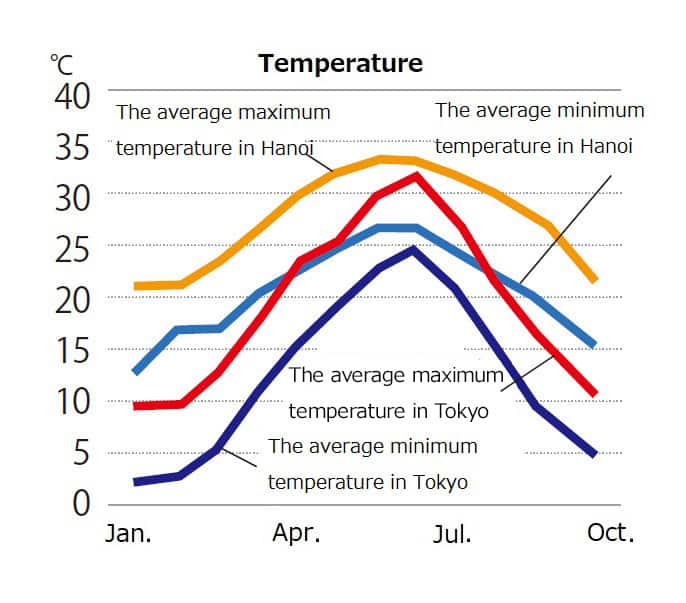
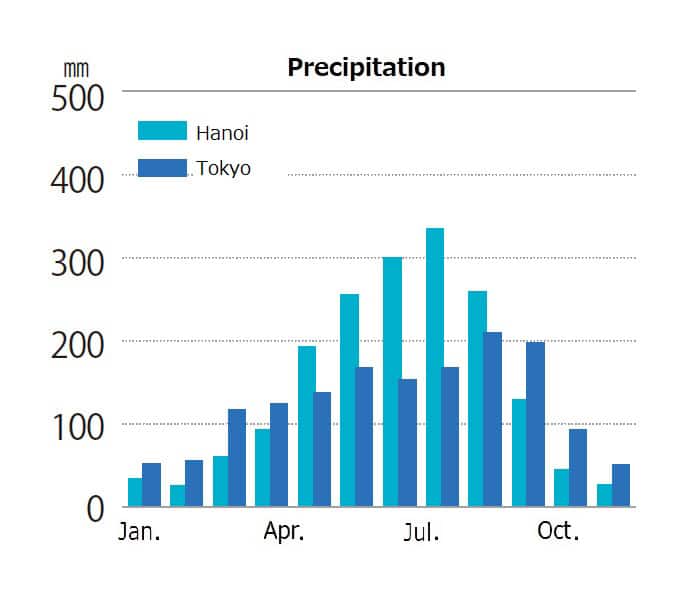
Hanoi has a subtropical climate with some seasonal variations. Summer that is from May to late October is the rainy season when it is hot and there are short but heavy squalls on an almost-daily basis. June to August is especially hot and is the heat wave season when temperatures exceed 30°C for days on end. In addition, the humidity reaches 90%, creating a damp muggy heat that feels like a sauna, and temperatures barely drop even at night. November to April is the dry season during which there is a brief fall, winter, and spring. From January to April, a light drizzle falls called mưa phùn in Vietnamese, cooling the air considerably. The temperature sometimes even drops to 7 or 8°C around December to February.
-
Monthly average temperature and precipitation
The average maximum temperature in Tokyo and Hanoi, The average minimum temperature in Tokyo and Hanoi
month The average maximum temperature in Tokyo The average minimum temperature in Tokyo The average maximum temperature in Hanoi The average minimum temperature in Hanoi Jan. 10℃ 2℃ 21℃ 13℃ Feb. 10℃ 2℃ 21℃ 16℃ Mar. 13℃ 5℃ 24℃ 17℃ Apr. 18℃ 10℃ 26℃ 21℃ May 23℃ 15℃ 30℃ 23℃ Jun. 25℃ 18℃ 32℃ 25℃ Jul. 28℃ 23℃ 33℃ 27℃ Aug. 31℃ 24℃ 33℃ 26℃ Sep. 27℃ 21℃ 32℃ 24℃ Oct. 23℃ 15℃ 29℃ 21℃ Nov. 17℃ 10℃ 27℃ 18℃ Dec. 13℃ 5℃ 22℃ 15℃ The average precipitation in Tokyo and Hanoi
month The average precipitation in Tokyo The average precipitation in Hanoi Jan. 40mm 30mm Feb. 40mm 20mm Mar. 110mm 60mm Apr. 110mm 90mm May 120mm 190mm Jun. 160mm 250mm Jul. 150mm 300mm Aug. 160mm 330mm Sep. 210mm 250mm Oct. 200mm 120mm Nov. 90mm 30mm Dec. 40mm 20mm
Currency and Exchange Rate, Tax, Currency exchange, Tip
Currency and Exchange Rate
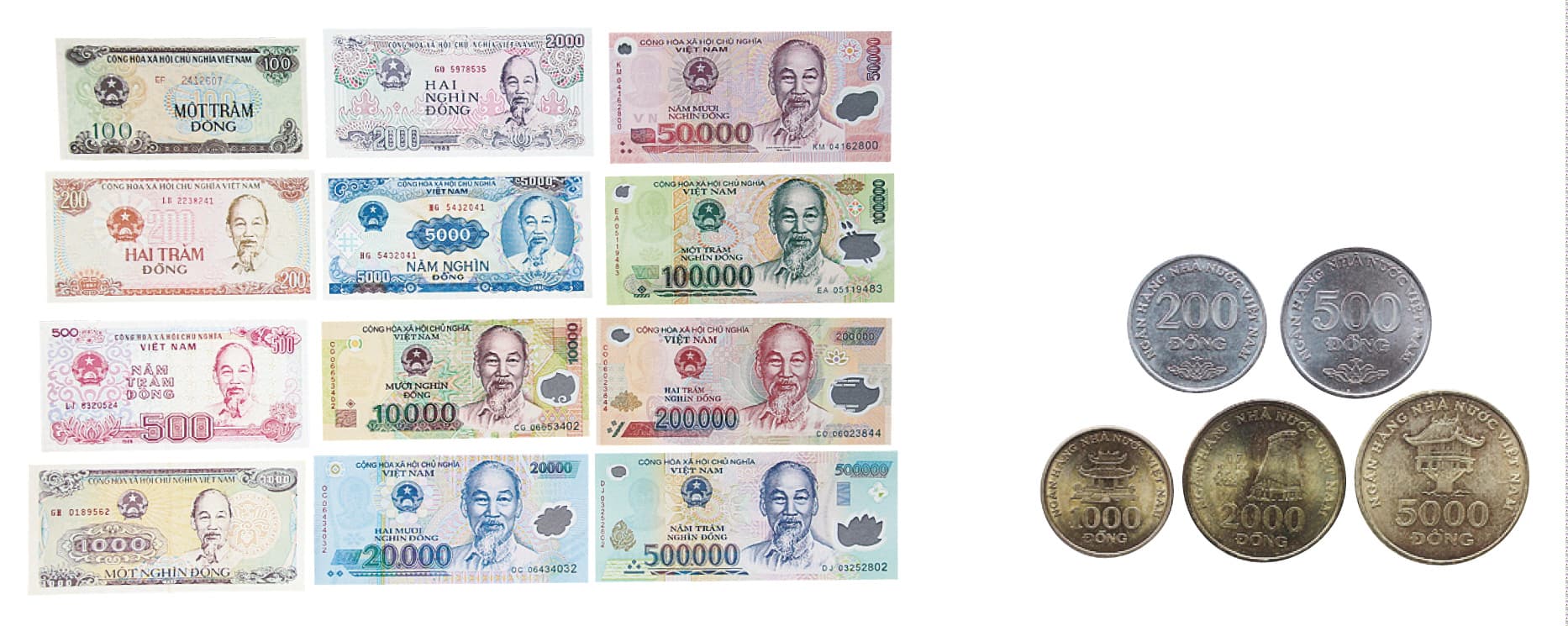
Torn or excessively dirty banknotes may not be accepted, so be careful what you receive at money exchanges and when receiving change.
The unit of currency is the dong (VND). Banknotes come in 12 denominations: 100, 200, 500, 1,000, 2,000, 5,000, 10,000, 20,000, 50,000, 100,000, 200,000, and 500,000 dong. The 100 and 200 dong notes are not widely circulated. Coins come in five denominations: 200, 500, 1,000, 2,000, and 5,000 dong. These are also no longer in circulation. US dollars that were previously in circulation are prohibited from being traded outside of designated areas and are basically no longer in circulation. VND 1,000 is approx. JPY 6 (As of February 26, 2026). Be careful not to confuse the different banknotes as they have large numbers of digits and similar patterns.
Tax
A value added tax (VAT) of 10% is normally charged, but travelers typically only pay VAT at places such as mid- and high-class hotels, restaurants, and cafes. However, tax reduction measures in place as of February 2026 reduce VAT to 8% until the end of 2026 (excluding some alcohol and tobacco products). VAT refund counters are available at airports and ports with international flights, and refunds can be received by following the proper procedures. It is advisable to check the details in advance.
Tip
Vietnam does not have a custom of tipping, so basically it is not necessary.
- Restaurants: Not required in restaurants other than upscale restaurants. Even in upscale restaurants, it is unnecessary when a service charge is added.
- Hotels: Tip porters and room service approx. VND20000 to VND50000.
- Tour guide and driver: For private tours, give a tip of at least 100,000 dong per day of the tour. You don't need to give a tip on a cheap tour.
- Massage and spa: If you do give a tip, 50,000 to 100,000 dong is about right. In some cases the tip and/or service fee is included in the tour charge, so check beforehand.
- Taxies: Not necessary.
Voltage and plug
Voltage
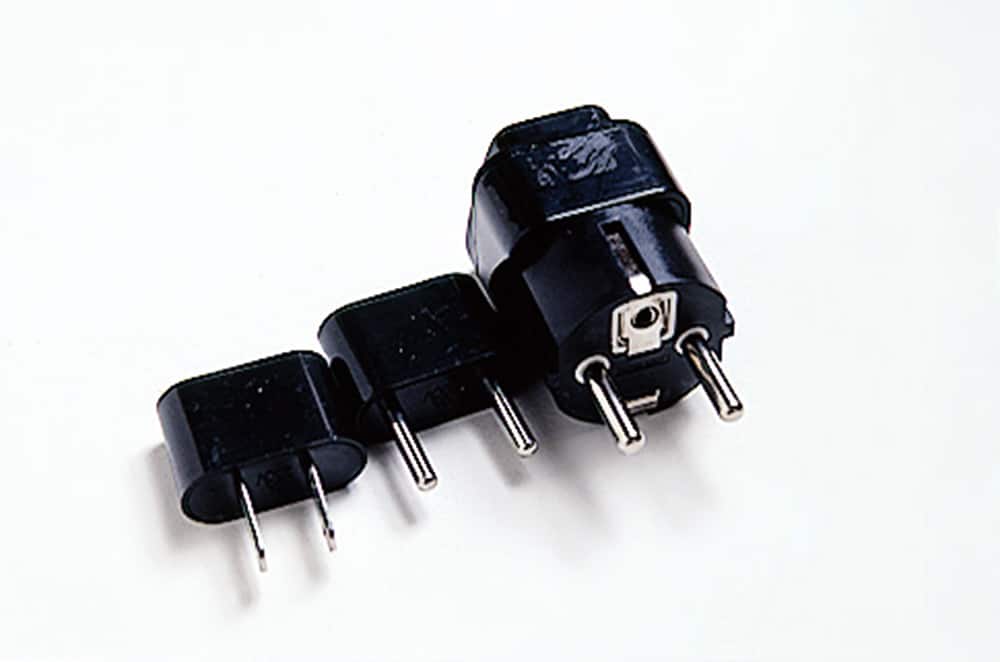
A conversion adapter for Type A, Type C, and Type SE
Voltage is almost always 220V, but in rare cases it is 110V. The cycle is 50Hz. Many plugs are a combination of Type A and Type C. There are Type A, Type C, and in rare instances, Type SE and Type BF plugs. Using 100V electric products from Japan requires a transformer. Even Japanese electric products that handle 100V to 240V can be used without a transformer, so read the instruction manual for electronic products you plan to use. However, be aware that even products that can handle 100V to 240V require a conversion adapter for the plug.
Video and DVD
Video and DVD
Do not forget to check the region code when purchasing a DVD. The DVD region code for Vietnam is 3, while it is 2 for Japan. DVDs cannot be viewed in Japan unless they are clearly marked “All code” (but can be viewed on a computer even if region code 3). Be aware that bringing copied DVDs of animes and movies, etc. into Japan is not permitted.
Post Office Business Hours
Though it differs slightly for each post office, usually they are open from 7:30 to 18:00. Some post offices are also open on Sundays.
Postal Fees
Airmail to Japan costs VND19,000 up to 20 g. EMS small parcels up to 5 kg cost VND1,095,120. 2-5 days required.
Phone Call
How to phone
Telephoning Japan from Vietnam
Telephoning Japan from Vietnam
Ex. When calling Tokyo (03) 1234-5678
STEP1
dial 00 (International telephone identification number)
STEP2
81 (Country Code, Japan )
STEP3
3 (Remove the first 0 for area codes)
STEP4
1234-5678(Other parties telephone number)
Telephoning Vietnam from Japan
Telephoning Vietnam from Japan
Ex. When calling Ho Chi Minh(028) 1234-5678
STEP1
010 (International Identification No.)
For the three cell phone carriers, hold down 0 until + appears, then add the country code and the phone number your wish to dial.
Pre-registration to World Call is required for NTT DoCoMo.
STEP2
84 (Country Code, Vietnam)
STEP3
8 (Area code, remove first 0)
STEP4
1234-5678 (Other parties telephone number)
Holiday / National holiday
Holiday / National holiday
2026
- January 1: New Year’s Day
- February 17: Tet (Vietnamese New Year)*1
- April 27: Anniversary of the Death of Hung Vuong
- April 30: Reunification Day
- May 1: May Day
- September 1~2: National Day (Independence Day)*2
- *1.Five days are allotted for the Tet holiday every year, and about one week before and after Tet is also a holiday, though the exact length varies from year to year. Tet 2027 will fall on February 6.
- *2.This holiday has been two days long since 2021.
Language
Language
The official language is Vietnamese, which is written using characters called Quoc Ngu. English is often understood in places that cater to foreigners and travelers. Some stores also understand Japanese. In addition, some senior citizens understand French and Russian.
Business hours, etc
Business hours
Below are guidelines for general business hours, which differ by shop, restaurant, etc.
Banks
Mon. to Fri. 8:00 to 11:30, 13:00 to 16:30, closed on Sun., holidays. Some places are open on Sat, but many are only open until lunchtime. Currency can be exchanged during business hours at many banks, but you will need your passport.
Shops
9:00 to 21:00.
Restaurants
10:00 to 22:00, but some places like cafeterias open at 6:00 and close at 24:00. In addition, many upscale restaurants close for 2 to 3 hours between lunchtime and dinnertime.
Age Limit
Neither tobacco nor alcohol is regulated by law. Their consumption is socially acceptable around the age of 18.A license is required for driving motorcycles that are over 50 cc, and this rule applies to foreign nationals as well. In addition, as Japan and Vietnam are part of different conventions for international driving permits, a Japanese international driving permit cannot be used in Vietnam. Be aware that the penalty for driving without a driving permit has increased with a 2025 revision in the law.
Related Tags





ANA MILEAGE CLUB
Member Login
Information for Members Logging In
- Before proceeding to log in, please be sure to read and accept the section on the purpose of using personal information in the ANA Privacy Policy.
- Points to note when using your AMC account.
Auto-Login with Cookies
- However, you will need to re-enter your password as a form of verification when making reservations, requesting awards, registering/revising personal information, and using other members-only functions.
-
The confirmation screen will reappear after closing all browser windows even if you checked "Do not show this screen again."
Entry of One-Time Password
If you have not received your one-time password
If your one-time password does not come through, please check your settings for receiving it and then re-send it.
If you do not do anything on the screen for a certain amount of time, you will have to request another one-time password.
Select your desired destination email address.
Do you really want to log out?
- If you click "Log Out," you will be logged out even if you have selected "Save Login Status."
- Close all open browser windows if you want to quit your session without logging out.
-
The confirmation screen will reappear after closing all browser windows even if you checked "Do not show this screen again."

ANA Biz is a business travel arrangement service.

-
MILES
-
ANA SKY COINS
-
Premium Point / Point on ANA /
-
Reservations
-
MILES
-
MILES
-
Login
-
Support