
- Please select the card you wish to join
-
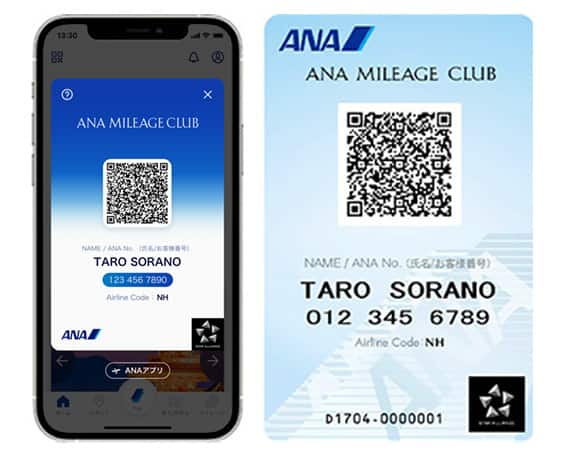
Get your digital card immediately
No enrollment or annual fees
ANA Mileage Club Card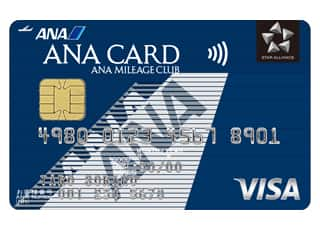
Earn more miles for your money
With credit function
ANA Card
Seasonality and Required Mileage Charts for
ANA International Flight Awards

Information
-
Credit card payments for cancellation fees when refunding Flight Awards, which had been suspended due to system adjustments, will be available from January 27, 2026. (Updated January 27, 2026)
-
New services will be added and some services will be changed for ANA International and Partner Airline Award reservations and tickets issued on and on/after June 24, 2025. For details, please refer to Various Conditions of ANA Milage Club Member Services.
-
Except for certain classes and seasons, the required mileage for ANA international flight awards will be revised from Tuesday June 24, 2025. For details, please see Revisions to Required Mileage for ANA International Flight Awards.
Required Mileage
The number of miles required to redeem an award will vary depending on the departure and destination zones, the seasonality of the departure dates, and the class of service.
How to Confirm Required Mileage
STEP 1
Confirm the zones for the departure and destination points.
Confirm the zones for the departure and destination points.
STEP 2
Confirm departure date seasonalities.
See the seasonality charts to check the applicable season for your departure dates.
STEP 3
Confirm required mileage.
See the required mileage chart to check the number of miles required for your class of service.
Zones
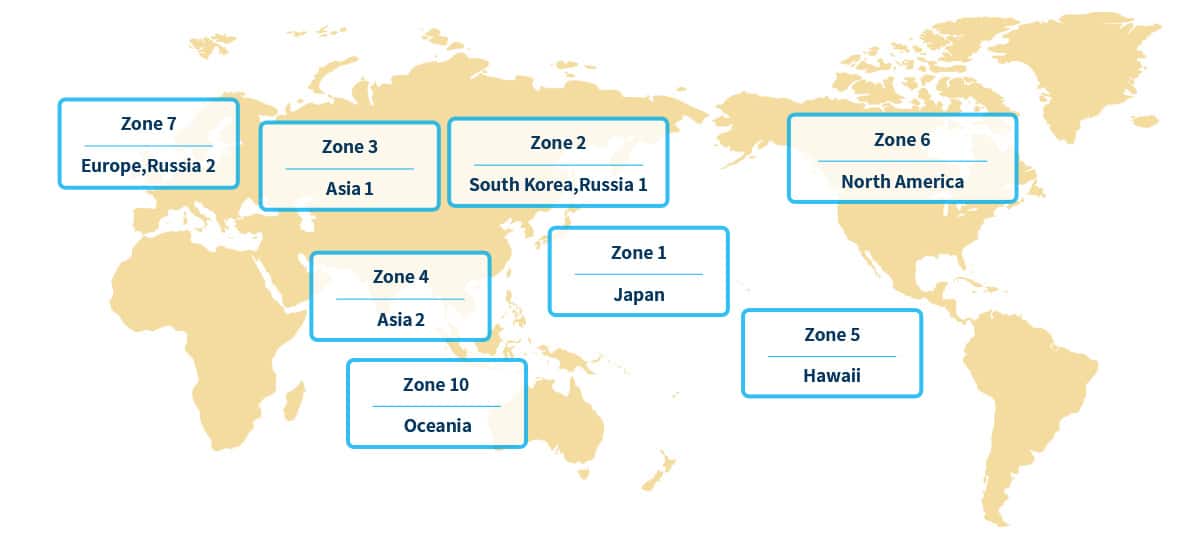
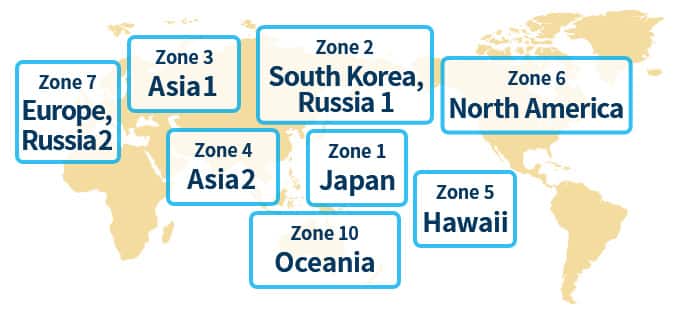
| Japan (Zone 1) | Japan |
|---|---|
| South Korea, Russia 1 (Zone 2) |
|
| Asia 1 (Zone 3) |
|
| Asia 2 (Zone 4) |
|
| Hawaii (Zone 5) | Honolulu |
| North America (Zone 6) |
|
| Europe, Russia 2 (Zone 7) |
|
| Oceania (Zone 10) |
|
Seasonality Charts
"L", "R" and "H" mean low, regular and high season respectively.
-
Departure and Destination: Japan, South Korea, Russia1 (Zone 2), Asia1 (Zone 3) or Asia2 (Zone 4)
Year Low Season (L) Regular Season (R) High Season (H) In 2026 - January 5 to February 13
- April 1 to April 28
- May 11 to June 30
- February 14 to March 31
- July 1 to July 17
- August 24 to December 20
- January 1 to January 4
- April 29 to May 10
- July 18 to August 23
- December 21 to December 31
In 2027 January 5 to February 3
April 12 to April 28
May 10 to June 30
December 1 to December 19February 7 to March 31
April 1 to April 11
July 1 to July 15
August 24 to September 30
October 8 to November 30- January 1 to January 4
February 4 to February 6
April 29 to May 9
July 16 to August 23
October 1 to October 7
December 20 to December 31
In 2028 January 5 to January 24 February 1 to March 31 January 1 to January 4
January 25 to January 31 -
Departure and Destination: Japan, North America (Zone 6) or Europe, Russia2 (Zone 7)
Year Low Season (L) Regular Season (R) High Season (H) In 2026 - January 6 to February 28
April 1 to April 28
- January 4 to January 5
March 1 to March 31
May 10 to July 15
August 24 to December 18
- January 1 to January 3
April 29 to May 9
July 16 to August 23
December 19 to December 31
In 2027 January 6 to February 28 - January 4 to January 5
March 1 to April 28
May 10 to July 15
August 23 to December 19
January 1 to January 3
April 29 to May 9
July 16 to August 22
December 20 to December 31In 2028 January 6 to February 29 January 4 to January 5
March 1 to March 31January 1 to January 3 - January 6 to February 28
-
Departure and Destination: Japan, Hawaii (Zone 5), or Oceania (Zone 10)
Year Low Season (L) Regular Season (R) High Season (H) In 2026 - January 7 to February 28
April 1 to April 27
May 10 to May 31
July 1 to July15
- January 4 to January 6
March 1 to March 31
June 1 to June 30
August 24 to December 18
- January 1 to January 3
April 28 to May 9
July 16 to August 23
December 19 to December 31
In 2027 January 6 to February 28
April 1 to April 28
May 10 to May 31- January 4 to January 5
March 1 to March 31
June 1 to July 15
August 23 to December 19
January 1 to January 3
April 29 to May 9
July 16 to August 22
December 20 to December 31In 2028 January 6 to February 29 January 4 to January 5
March 1 to March 31January 1 to January 3 - January 7 to February 28
-
*
The specified periods in the seasonality charts may change for reasons such as sales promotions.
Required Mileage Charts
Example of Required Mileage Confirmation (when seasonality differs for the outbound and return journeys)
Itinerary without Any Connections
-
*
The symbol "-" indicates the destination.
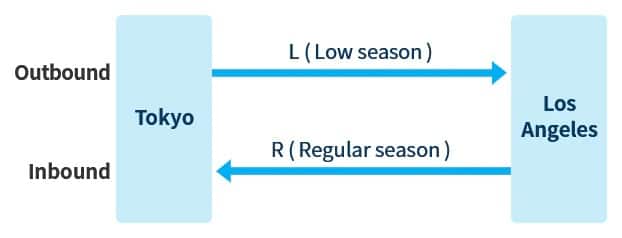
Example: Tokyo - Los Angeles - Tokyo. Outbound: L season; Return: R Season; Traveling in Economy Class.
-
STEP 1 Confirm the zones for the departure and destination points.
Confirm the departure and destination zones by using the zone chart for ANA international flight awards.
Tokyo is in Japan (Zone 1).
Los Angeles is in North America (Zone 6).
-
STEP 2 Confirm departure date seasonalities.
Confirm the seasonalities (low, regular or high) for the departure dates of both the outbound and return journeys by using the ANA International Flight Award Seasonality Chart.
The outbound journey (Tokyo to Los Angeles) is L (low season).
The return journey (Los Angeles to Tokyo) is R (regular season).
-
STEP 3 Confirm required mileage.
Confirm the required mileage for the departure and destination zones, seasonalities, and classes of service by using the required mileage charts for ANA international flight awards.
The outbound journey (Tokyo to Los Angeles) is 40,000 miles.
The return journey (Los Angeles to Tokyo) is 50,000 miles.
For this itinerary, the required mileage for both the outbound and return journeys are divided by 2, then totaled.
Required Mileage (for Economy Class)
(40,000 miles / 2 = 20,000 miles) + (50,000 miles / 2 = 25,000 miles) = 45,000 miles
Itinerary with a Connection
-
*
The symbol "-" indicates the destination.
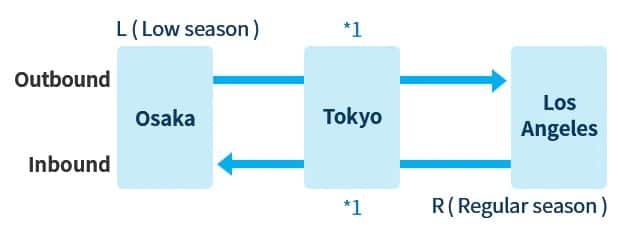
Example: Osaka - Tokyo*1 - Los Angeles - Tokyo*1 - Osaka. Outbound: L season; Return: R season; Traveling in Economy Class.
-
*
1
Indicates a connection within 24 hours.
-
STEP 1 Confirm the zones for the departure and destination points.
Confirm the departure and destination zones by using the zone chart for ANA international flight awards.
Tokyo and Osaka are in Japan (Zone 1).
Los Angeles is in North America (Zone 6).
-
STEP 2 Confirm departure date seasonalities.
Confirm the seasonalities (low, regular or high) for the departure dates of both the outbound and return journeys by using the ANA International Flight Award Seasonality Chart. (Use the seasonality chart for flights between Japan and Europe/North America to determine the seasonalities for the first outbound sector (Osaka to Tokyo) and the first return sector (Los Angeles to Tokyo).)
The first outbound sector (Osaka to Tokyo) is L (low season).
The first return sector (Los Angeles to Tokyo) is R (regular season).
-
STEP 3 Confirm required mileage.
Confirm the required mileage for the departure and destination zones, seasonalities, and classes of service by using the required mileage charts for ANA international flight awards.
Osaka (Zone 1) to Los Angeles (Zone 6) is 40,000 miles
Los Angeles (Zone 6) to Tokyo (Zone 1) is 50,000 miles.
For this itinerary, the required mileage for both the outbound and return journeys are divided by 2, then totaled.
Required Mileage (for Economy Class)
(40,000 miles / 2 = 20,000 miles) + (50,000 miles / 2 = 25,000 miles) = 45,000 miles
Please see the terms and conditions for itineraries containing several different zones and classes and other cases.
ANA International Flight Awards
Related Tags





Member Login
Information for Members Logging In
- Before proceeding to log in, please be sure to read and accept the section on the purpose of using personal information in the ANA Privacy Policy.
- Points to note when using your AMC account.
Auto-Login with Cookies
- However, you will need to re-enter your password as a form of verification when making reservations, requesting awards, registering/revising personal information, and using other members-only functions.
-
The confirmation screen will reappear after closing all browser windows even if you checked "Do not show this screen again."
Entry of One-Time Password
If you have not received your one-time password
If your one-time password does not come through, please check your settings for receiving it and then re-send it.
If you do not do anything on the screen for a certain amount of time, you will have to request another one-time password.
Select your desired destination email address.
Do you really want to log out?
- If you click "Log Out," you will be logged out even if you have selected "Save Login Status."
- Close all open browser windows if you want to quit your session without logging out.
-
The confirmation screen will reappear after closing all browser windows even if you checked "Do not show this screen again."

ANA Biz is a business travel arrangement service.

-
MILES
-
ANA SKY COINS
-
Premium Point / Point on ANA /
-
Reservations
-
MILES
-
MILES
-
Login
-
Support